
Categories
-
Recent posts
- Hopping out of a plane for the homeless at Skydive Swansea.
- Volunteering with Caring at Christmas 3: Supervisory responsibility and learning more about homelessness
- The Magic Elves at Bristol Old Vic
- Mayfest: Nightwalk by Tom Bailey and Jez Riley
- ‘Minotaur’ at Bristol Old Vic
- ‘Exposed’ by The Impulse Collective at The Bierkeller Theatre
- Theatre Reviewing and Theatre Bristol Writers
- ‘The Last Voyage of Sinbad the Sailor’ by Travelling Light at Tobacco Factory Theatres
- ‘Once Upon A Time in A Western’ by Le Navet Bete at Circomedia
- ‘Up Down Boy’ by Myrtle Theatre Company at The Brewery Theatre
- ‘Monkey Bars’ by Chris Goode and Company at The Tobacco Factory Theatre.
- ‘We’re not that different me and you’ – fulfilling potential and changing perceptions with The Misfits Theatre Company
- Culmination – a Mayfest journey from audience to stage and how to fall off a precipice
- Out of the tick box and into the grey…move over darlings we’re 50 shades of gay – celebrating LGBT month, diversity, sexuality and pondering the consequences of silence.
- Opening doors and strengthening communities – the Volunteer Host experience at Bristol Night Stop
- ‘If things don’t change’ performances at Windmill Hill City Farm & Mayfest/The Wardrobe Theatre 2013
- On remembering and sharing – reminiscing with the older peoples group at Windmill Hill City Farm
- Clown jam – down at the farm..
- Ujima Radio interview – more Caring at Christmas
- A Christmas made visible (altruism is dead, long live reciprocity -) a second experience of ‘Caring at Christmas’
- Clown is a philosophy… (a little radio interview I did about clown..)
- Breadline Britain – The lunch club.
- ‘I could have been better’ by Idiot Child at Bristol Old Vic
- Time for change: experiences of social media strategies and what happens when you cry on the internet
- On vulnerability, sharing and the healing power of storytelling – Performing ‘Only Us’ at Bristol Old Vic
- Why I couldn’t become a Dr without being a clown first – Flying Awkwardly 2.0 – 2 years in the life of a PhD student.
- Devoted and Disgruntled Roadshow – What does amateur mean? Widening participation in theatre
- Why you should wear your clown shoes at a funeral – on dying, wake’ing and crematorium parakeets
- Writing and….. the object @The Arnolfini
- Clowning Part II – end of course clown showing
- Auschwitz and dark tourism
- The living bridge..
- Fried tarantula
- I disabled my facebook profile (call the police!)
- Why Bedminster is amaze balls
- Murmuration
- Happy New Year blog! Looking back at 6 months of meanderings and the privileges of sharing
- The Bullet & The Base Trombone/ The Morpeth Carol at Bristol Ferment
- A certified clown!! the end of clowning part I
- Tales of Christmas past #1 The Invisible Christmas
- The clown who was not dead (or beginning adventures with my nose)
- Clown is… (a reflection)
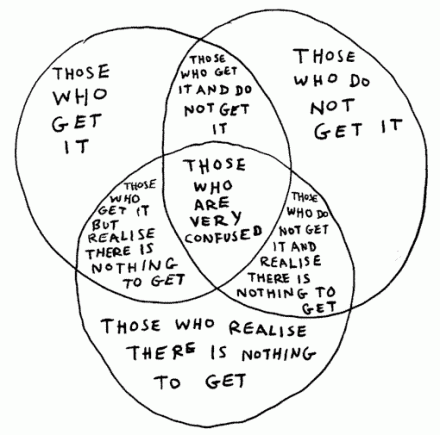
- Get it?
- Clown is… (a poem)
- A trip on the Mayflower..
- Adventures in film – Untitled 1.2
- Flying awkwardly: a year in the life of a first year PhD student.
- R’s story…..
- Investigating social enterprise..
- A Corner of the Ocean @ the tobacco factory theatre
Archives
- April 2015
- January 2015
- December 2014
- May 2014
- April 2014
- February 2014
- December 2013
- October 2013
- July 2013
- May 2013
- March 2013
- January 2013
- November 2012
- October 2012
- September 2012
- August 2012
- July 2012
- June 2012
- May 2012
- April 2012
- March 2012
- February 2012
- January 2012
- December 2011
- October 2011
- September 2011
- August 2011
- July 2011
- June 2011
- May 2011
Category Archives: Society and Community
Fried tarantula

(Spring 2004)
We were travelling overland on a group tour. A small party of international travellers of varying ages, sizes and descriptions, united by a love of adventure, the unexpected and a curiosity for different cultures. We were strangers on arriving in the country, but had become a happy unit by the time we left it.
It was toward the end of our experience. We had negotiated canals by dugout boat, cities, historic ruins and jungles, temples, beaches, swam in forest rivers, discovered deserted hill forts and learnt of the genocide and regime which had scarred both a people and land. The journey took us by train, boat, public bus, and in the back of pickup trucks which transported us far and wide across Cambodia.
We had been travelling for many hours by mini bus across treacherous dirt tracks and uneven broken highways. It was early April and nearing the end of the dry season. The air conditioning unit had long since broken, and relief from the heat was occasionally brought through the open windows along with views of dusty fields, shacks, ploughs, occasional cattle and waving children along the roadside. Lorries frequently passed us, precariously piled high with goods or stock, mountains of cargo which were often double the size of the vehicle carrying them and were sometimes topped off by sleeping human bodies or roped, bewildered looking animals.
Our tour demanded a twelve hour journey that day, and we were relieved when the bus pulled in for a break at a roadside cafe/interchange. It was a square concrete looking building, which was offset with brightly coloured plastic tables and chairs. It was busy with a number of (mostly) men eating, gambling, or conducting business as traders would meet at the ‘half way point’ between towns to exchange/buy goods and other matters.
Tumbling wearily out of the bus I was immediately conscious of how strange we looked to the locals. Our dress, our manner or gadgets and adornments, all seemed alien in this world despite the fact these were ‘simplified’ versions of ourselves so as to accommodate our travels. Reactions to our party were different all around Cambodia and often related to the level of tourism development which had taken place. It was curious and beneficial to experience life as a kind of ‘other’ an alien in a foreign land. Sometimes it was curiosity, indifference, annoyance, frustration, fascination, but usually we were greeted with compassion and with a warm generosity. Having recently recovered from such tragic events, the Khmer people seemed to usually find something to smile about regardless of their circumstances. People here though, seemed a little less trusting of strangers.
During the regime many people were sent out to work the land and forced to live in poverty (and still do). Most Khmer people learnt to survive on whatever they could find, which is how the local snack of fried tarantula came to be popular in this particular area we passed through. Usually at ‘service stations’ you could pick up essentials – bottles of water, fried rice, mango, salt and chilli pineapple, everything always wrapped in tiny plastic bags, but it was the only time I ever saw anything like this on my travels there.
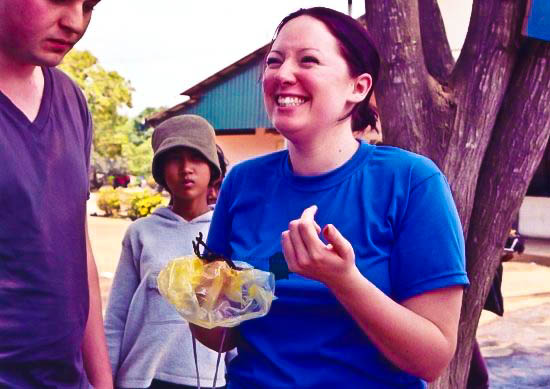
The sight of the spiders was fascinating. To see them all together was, essentially, your worst nightmare realised. Even dead they look pretty formidable given their size. I was interested in how something which people were usually so afraid of could actually nourish them. So I bought one. I was the only person to go for it. Most of the others were so frightened of spiders it was just too gross to be considered.
It tasted mainly of garlic. The legs were furry and on the ends were charred, sort of like a burnt furry twiglet. They were hard to swallow at times and got stuck in my throat. There was a small amount of firm meat on the body. I can’t really remember what it tasted of now – I think mostly garlic and woodsmoke. I think I had a good go at it and ate most of the body. Might have left a few legs though. The other travellers were impressed/repulsed.
I felt strangely proud in that moment.
We continued on the journey by bus and in the evening finally reached the capital Phonm Penn. The idea of the tour experience overall was a deliberately ‘local’ one and for most of the holiday we camped, stayed with local families, used *very* basic guesthouses or overnight transport.
The hotel in the capital was our one night of luxury.. but by then it seemed almost obscene that after our extraordinary backpacking adventures we now stayed in a palace of chrome and glass complete with running water, air conditioning, toilets with seats and neatly ironed pristine white sheets. I felt perfectly fine for the entire night but it wasn’t until getting up the next day that I began to feel queasy.
My roommate said she was sure it was the spider that did it.
We got up a little late for breakfast and rushed to make the sitting. It was a weekday and the prestigious hotel was bustling with high end tourists and Khmer business executives. By then I realised I felt rough, really rough. We were quite high up in the building, perhaps on the top floor and we both managed to squeeze into the busy mirrored lift right by the doors.
It must have been the motion of the lift dropping that made my queasy stomach turn so violently. I held on as the lift began to sail steadily downward. Floor 8, floor 7, floor 6, (I needed the get to a toilet pronto) floor 5, floor 4, (just hold on, I thought). What happened next was some kind of unfortunate miracle of timing.
The lift reached the ground floor and I can remember thinking as I heard the familiar ‘ding’ that I was going to make it. (I am definitely going to make it) I thought.
Wrong.
The doors swung back and in almost perfect synchronicity, as I stepped out through them, I vomited violently (perhaps in the manner of the exorcist film or similar) straight out across the lobby in front of the reception desk, a queue of guests waiting to check out, most of my fellow travellers and several tables of nearby breakfast diners. I can still remember the look of shock on the receptionist’s faces as my body wretched involuntarily and dramatically to expel (possibly the spider but we don’t know) whatever it was that poisoned it (Which I then helplessly deposited in the middle of the posh reception).
Once people had gotton over the shock, it seemed that no lasting damage was done. Things were cleared away, and I, after a few days, recovered.
People have since asked me, if I had the choice again, would I still eat the spider?
Every.
Single.
Time.
I disabled my facebook profile (call the police!)
Last week I did something radical…
I DISABLED MY FACEBOOK PROFILE!!!!!!
And so far – it’s been interesting.
Facebook has experienced huge growth since its launch in 2004 with a reported 845 million active users in February 2012. The social networking site provides a shared online webspace for individuals and their friends to chat, post messages/email and share uploads /activities relating to their interests.
I’ve been a member of the site since around 2007/8. Since I joined I’ve spent a good amount of time using the site. I currently have around 250 friends (although at one stage I was hitting 700). I have been in contact with old friends from school, joined groups for events, shared photos and communicated with friends across the world both whilst at ‘home’ and whilst abroad travelling. I can literally communicate ‘on the move’ picking up facebook from my smartphone at any time where I have a signal. It has had some positive impact on my life, increased my online presence and connection with others. So why the change?
It’s difficult to pinpoint exactly where the tipping point was that made me want to take a step back from it. From a practical level the site has been subject to constant upgrades and re-designs with privacy rules and process changing frequently. This unsettles me as I feel less in control of the data that I share. The most frequent introduction ‘timeline’ encourages you to input all your personal history and it got to a stage where I didn’t understand why that was really necessary. The accuracy of the targeted marketing on facebook is frightening (with ‘bots’ often picking up key words from status updates etc ) and whilst its great to share info on line this can also backfire with the world being informed of your relationship breakup or latest family drama. This is pretty rubbish if it’s something serious such as a hospital emergency or similar.
One of the key things I have noticed is the more that I have shared on facebook the less people in my life have felt it necessary to actually to talk to me. Being a research student can be a lonely process at times, and whilst other people have felt that they are up to date with my goings on via facebook, I’ve really missed having face to face contact with them. My main resolution is to try and get back into the habit of having actual conversations with people and hopefully encourage them to do the same.
I started to also wonder what the implication was in terms of emotional investment in the past. Having your entire life history mapped out in front of you may not be the best thing in terms of relationship break up or family dispute and who really needs to be reminded of certain past events? I know several of my friends who have completed the obligatory ‘facebook stalk’ of their new partners torturing themselves with photos of their current beau in previous relationships. I was also contacted by a ‘bully’ from years gone by who seemed to have no recollection of what she put me through. So I silently ignored her friend request and the more I ignored her well guess what? She attempted to bully me again via the internet. Not really sure I needed that… is it really necessary to get back in touch with everyone from our past.. maybe if we’ve not kept in touch it’s for a reason and it’s better to let them go?
I noticed other changes in social activity too. One of my interest is photography and lately I have been making greater attempts to understand and document different aspects of social life. I want to understand and represent social issues (by social I mean those concerned with society) using photography to try and do that. So I am trying to think more about the meanings of the photos that I take. I’ve been on a few nights out recently where the activity seemed to be taking photos for facebook. Not enjoying the moment, or celebrating a specific event but for taking photo after photo of ..well..not a lot really. The whole dynamic of an evening out seems to be shifting from enjoying the moment to documenting it. Performing it even. Don’t get me wrong I’ve been just as guilty of this in the past as others have. I guess from my clowning training I am learning to try and live in the moment, but I witnessed how facebook is changing our sense of ‘being there’ with people posting on facebook groups about the night out whilst all being on the night out and a few metres away from each other. I started wondering if this was quite right. Also my research is concerned with the older people and they highlight so much the need for ‘being there’ with others. It made me more aware of my own absence in the present through technology/facebook.
I’v e been having these thoughts for a while and Shelly Turkle’s book ‘Alone Together’ has been on my amazon wish list since last year. Recently I picked up on a TED talk via Twitter (Oh the irony) given by Sherry regarding her research which discuss this concept of almost individual/group isolation. Have a look and see what you think.
One of the most interesting things is the way people react when I tell them. It’s become such a social norm that most people think I am bonkers. In addition more and more activities are being organised via facebook and my lack of an account has been seen as a real inconvenience. Also interesting to note is that a lot of people weirdly assumed they had done something to me personally and that I had singled them out for deletion rather than cancelling my own account.
I didn’t delete my facebook profile as I have lots of info I need to pull off as well as contact details of friends and family. I can go back in at any time and restore things if I want to, it has had some great benefits and in the past I have enjoyed sharing certain things with my friends and family. I guess what I’m doing currently is taking stock. Trying to exist in the moment and rekindle the physical co-present aspects of my relationships. Although people think I’m weird I’ve felt a lot better. Maybe I will re-boot the profile at some point in the future, but currently I am enjoying a new kind of freedom, – one of privacy, of acting in a different way, of trying to be in the here and now…. and to be honest the strongest feeling I have is a strange sense of relief.
Posted in Society and Community
Tagged Clowning, Sherry Turkle, Social Media, Social Networking
Why Bedminster is amaze balls
Being reasonably close to the town centre its often tempting to pop straight into town or my very favouritest place St Nicks Market for anything I need. Usually I do my shopping in Asda as its literally only a few minutes walk away. Recently and more so over Christmas I’ve found Asda to be a bit unbearable. Chaotic and overwhelming with bright lights, relentless sales pitches, screaming bored children , grown ups with ‘trolly rage’, rising prices and too much choice. During my last visit it took me ages to decide what kind of honey I wanted. I was there for around ten minutes trying to balance the environmental, moral, economic, social and ethical dilemmas that you face when presented with (I’m guessing ) around 20? different types of honey. Which is a more worthier cause? Bees from the UK or bees from Brazil? How many ‘food miles’ are involved – which is more sustainable – where does the money go and to what degree – who is benefiting the most from my purchase? – arguments in favour and against. In the end I couldn’t decide so I ended up buying two types and by the time I got home I realised that Asda had won the argument on all counts.
So today I ventured into Bedminster (south of the city – BS3) for the first time since I’ve lived in Bristol. I’ve popped up to the High Street maybe three times before (for the dentist and such like) but had never really had a full-on proper shopping experience. I had a lovely morning. Here is why:
Firstly its alive with discount shops – I get excited about these sort of shops mainly because I enjoy foraging a little bit for things that seem interesting. I found a lot of things which were very cheap and reasonable quality such as things for my room which are really expensive in town. Also there are lots of charity shops – I don’t always by clothes from these kind of shops but I am trying to do so more – one for cost reasons and two because we live in such a ‘disposable’ society I find it hard to justify continuous streams of consumption and buying stuff. Jessi Arrington’s mini TED talk sets out some of the reasons why it’s good to ‘wear nothing new’ (her presentation style is a little sugary but stick with it). Today I bought a brown corduroy jacket for £3.00 to wear with my jeans. Bargin.
It’s valentine’s day soon and quite frankly the massive annual societal push from all the shops/popular media for us to buy yet more shit for each other that we don’t really need, just makes me want to poke out both my eyes. Not only that – if you are not in a relationship, the pantomime that is valentines day is only designed to make you feel a whole heap worse about yourself but its okay – you can buy more shit for yourself to make it all better!!! (rant over). The onset of Valentines day has not escaped Bedminster but my cynicism was melted a little by the British Heart Foundations window display – where you can write messages of love to your favourite people: (mainly from kids but aww bless)

Next up: architecture I don’t know the history of Bristol that well but in Bedminster a lot of the buildings are old but quite beautiful. Some are no longer used unfortunately like the handsome looking London Inn below:

Closed now – but used to be a (horse) coach station apparently. Currently up for auction yours for £175,000. It can be seen in the background of a photo taken in 1919 I found via local historian BrizzleBuff – amazing pics on flkr – go check out the rest of them!

I also enjoyed shopping in local shops and meeting local shop and stall keepers– I can recommend Lee’s bakery (cakes look amazing) and the green grocers next door – (currently 3 x avocado for a £1, strawberries £1 a punnet) I also bought some curly kale as I read somewhere once that its really good for you, although I’m not sure exactly what I am going to do with it – Bedminster also sports a range of butchers shops and other fruit and veg stalls.


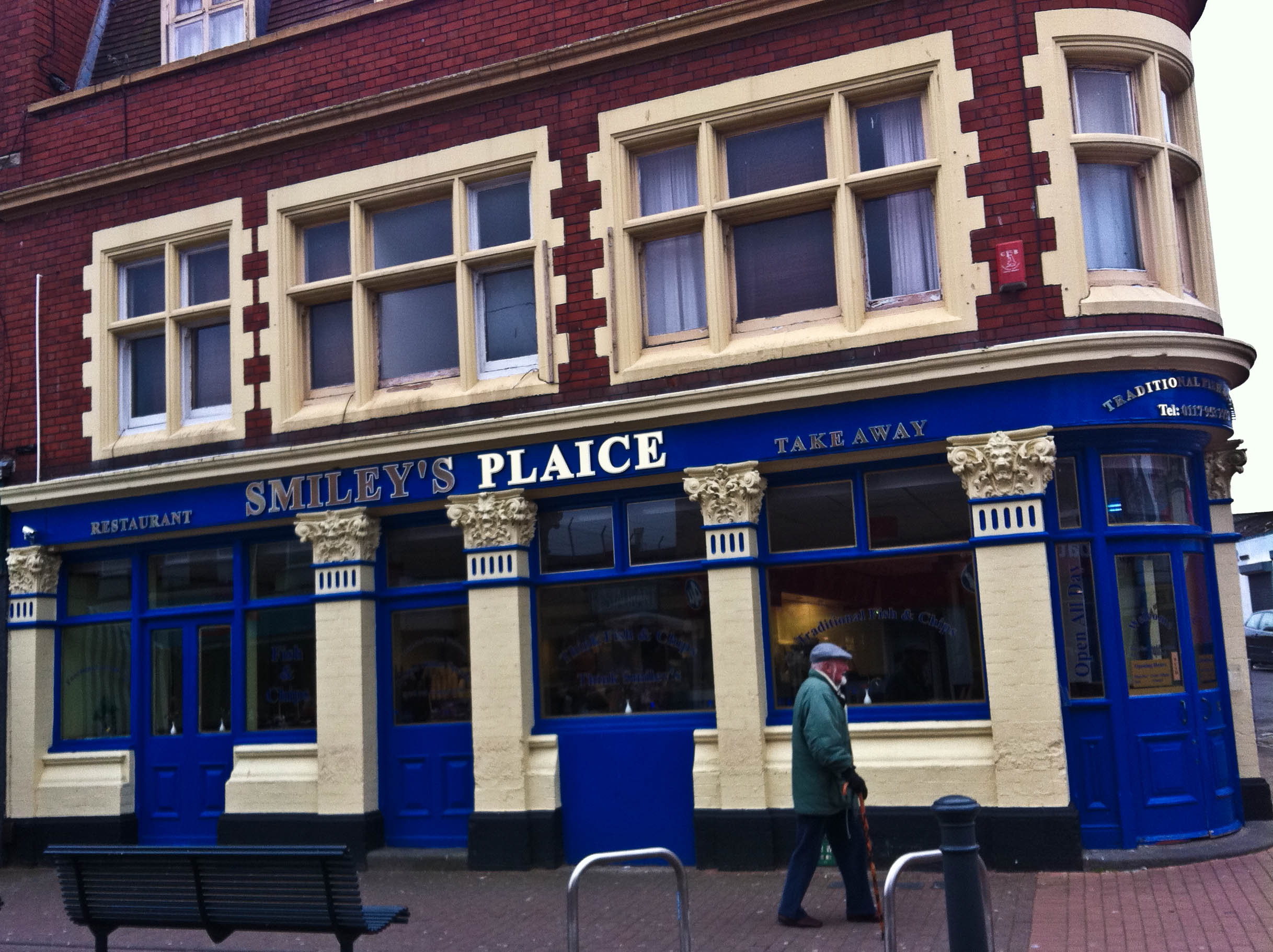
There is also a promising looking fish and chip restaurant that I discovered though I’ve not tried it out yet.
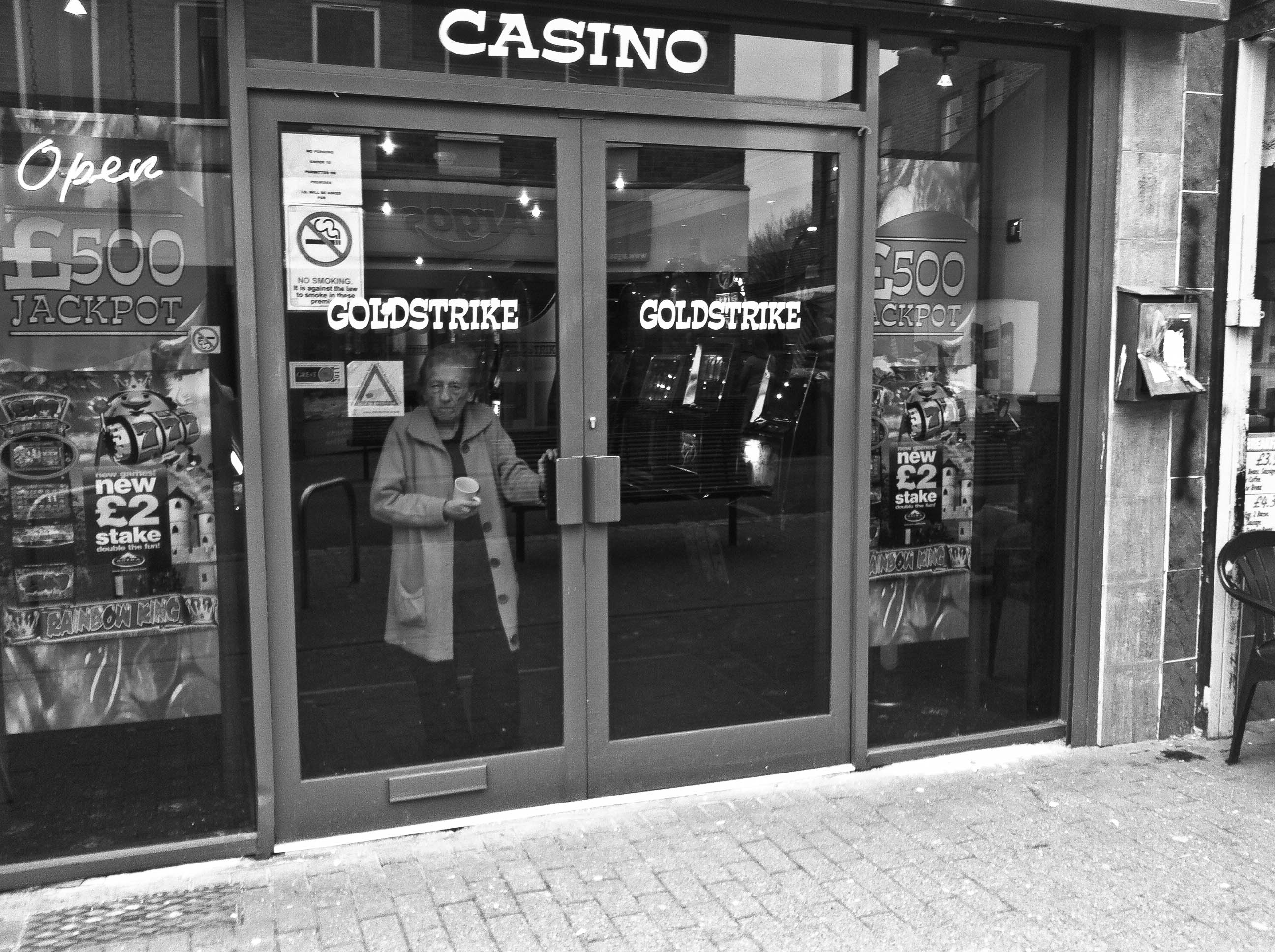
There are sadly a few amusement arcades and betting shops and a proportion of the shops, particularly in the shopping precinct by Iceland are empty (although I noticed recently that even some of the shop units in Park Street have not escaped this fate). Some of the pubs do look a bit dodgy but might be okay on the inside – you never know.
Finally I stopped for breakfast at the sunshine cafe. There are lots of little places to grab a cuppa in Bedminster. I picked this place initially as I used to work in a similar place for years back in Kent. Guess it felt familiar. It was packed, in fact most of the cafes were.

I think the best thing about Bedminster is its diversity of people – it was a different demographic to those you find in town, and my how sociable. Every shop I went into, people spoke to me. Conversations were happening in the street and in cafes and across tables. I ordered a vegi breakfast (diet progressing well you see) and ended up sharing my table with two older ladies and we had a good old chin wag. They were having bacon butties with the crusts cut off and seemed to be well acquainted with the waitress. I think they were regulars. A TV blared in the corner but not one person was watching it and going in there with a smartphone? Yeah might as well had a flag attached to your hat – had to put it away sharpish as I got some odd glances. Not in an intimidating way but mainly because people were all talking to each other. We all shared some laughs.
I walked home feeling in a very good mood, and very happy with my morning. I will be going back to Bedminster again soon. Lovely people.
Now all I have to do is work out what to do with the ‘curly kale’…
its a bit like a shrub really……
Happy New Year blog! Looking back at 6 months of meanderings and the privileges of sharing
Happy New Year blog! You are just over 6 months old..you have 4! (count em) 4 official followers! Some people have RSS’d you!! You’ve had over 3500 hits in the past 6 months!!!
As is the way at this time of year – it’s often useful to look back at events and experiences of the last 6 or 12 months, weigh up and contemplate successes and failures and have some kind of plan for 2012. Since beginning this blog I’ve had discussions with people, received feedback and begun to read the blogs of others.
So here are my thoughts on blogging so far.
The aim.
It’s hard to know if I should currently count my blog as a ‘success’….. doing so would possibly imply that it had some kind of aim.. and I’m not sure what the aim of it was to start with to be honest. I wanted a place just to put down thoughts to myself which perhaps others could share, reflect comment on…. to show things I make, create, write… to share photos I’ve taken and to attempt to document both my intellectual and artistic journey. I also occasionally use it for thoughts around my academic work. I guess what I’ve struggled to do is to refine it down to one single thing which I think in terms of blog ‘effectiveness’ (i.e communicating a single message) is traditionally not thought of as a good thing – but in terms of personal benefit I think it is. The blog is not just about my passions or my work or wholly biographical, wholly evidence based or wholly arts based. It is a combination of these things, because I am a combination of these things. I found it incredibly hard to define myself through one single activity or discipline or pursuit, and I rather think that perhaps similar to twitter this diversity, I would argue is a good thing.
As humans we are inherently habitual creatures and as Bourdieu writes, our experiences of everyday life and our place in the social settings/structures within which we are situated often lead us to ways of acting or ways of being which encourage us to replicate learned behaviour. Perhaps the continual stream of diverse subjects/topics coupled with a conflicting a lack of narrative (i.e mainly individual and unrelated blog posts) encourage not only small bites of knowledge dissemination or thinking points, and dialogue across disciplines, but also in addition (as is the way with this blog) combining art with this – will encourage the followers to interpret and reflect on their own experience in order to succumb to the often common modern human reflex which is to ‘order ‘ or to ‘make sense’ of everything. Again I view this as a positive thing. All to often in life we are taught to expect the linear neat ‘story’ this is demonstrated through our telling of history to the simple childhood fairytale. Its is an uncomfortable truth however that this is never really the case.
Whilst mostly blog posts have no specific narrative the one story that currently does emerge throughout is my story, as I am the sole creator of this blog. My story is inevitably told then perhaps covertly by demonstrating the topics I am interested in and more overtly by the inclusion of an element of biographical material, this which needs on to my next thinking point….
To share or not to share – that is no longer a question…
Blogs spring up for all sorts of reasons and I guess like twitter its entirely up to the individual how little or how much they disclose, or what level or personal topics they cover. At first I approached the blog with an intention of the ‘I’ remaining more removed from my writing. However unexpectedly as I began to write it seems that it became easier for me to express things… I also made another significant discovery. The word press site management functions enable me to see the search terms that people entered into google to arrive at my blog and I was really surprised as to the things that were coming up – a lot of the time they were related to productions, artists, theorists that I had mentioned but often they were more personal:
- My PhD supervisor shouts at me
- PhD student expectations
- PhD first year unhappy
- PhD I feel alone
- The body
There were a number of others, but I realised how the internet could be used to create meaning. As well as providing an element of personal catharsis I began to realise the potential of the internet to act as a type of virtual support for people who were experiencing the same/similar things whether positive or negative. By revealing the truth about our lives and revealing our authentic selves and to remove as far as possible the conscious effort to ‘self present’ ourselves.. the possibility that stigma around certain experiences may be removed, and perhaps in a most idealistic sense – support could be given even if no interaction between reader/blogger ever occurs. I noticed that as my posts became more honest and I revealed deeper things so did others. So they benefitted as well – in a way. Also I find the roots of my internet meanderings often come down to some basic philosophical things – life, death, love, family, food, sex, leisure – this perhaps reflects my own values and past/current experiences. Also my research – concerned with the experience of ageing often highlights these basic things. As we grow older and our worlds shrink, our bodies change and we approach the end of life inherently we appreciate and see things differently. The basic principles are often the most important and I guess so far my feelings around the issues brought to my attention all add up to the simpler and most fundamental things in life. It’s difficult and it becomes almost meaningless to attempt an over intellectualisation of the theory/issues/context surrounding the humanistic experience of ageing particularly when published in the blogsphere. I want it to be accessible. Not aimed at academics but to somehow use a language that speaks to everyone.
The future of this blog
So what’s in store for 2012? I guess for me and for the blog? I currently have 76 posts pending covering ideas for research, art, creativity, ageing, biography and other ideas. I hope to have a greater focus on my photography work and on my research which I hope will be of interest. I still have a number of reflection around courses I’ve attended and productions to write up which I hope to get done before I go back to work. I guess next year you can expect more of the same but with new stuff too – telling my story and the story of others. I expect that at times you will find it beautiful, uncomfortable, interesting, confusing and hopefully inspiring and thought provoking too. I currently plan to maintain this blog until September 2013. Then after that perhaps will act as documentary evidence of a transitionary time for me. Anyhow, whatever happens I hope somehow you get something out of it, even if you don’t always agree with it.
So, I’ll sign off now, I don’t think I will get a chance to post tomorrow so I guess from me I have to say ‘Happy New Year’ and thanks for following and commenting.. .. maybe on New Years eve you are off out to do something exciting…. maybe you are staying in and rejoicing in domestic bliss.. maybe you’re going to drink a bottle of Jack Daniels and wish the whole fucking pantomime would go away.. whatever happens I will see you on the other side…and maybe.. just maybe.. 2012 is going to be our year…
X

Posted in Society and Community
Tagged Authenticity, New Years Eve., PhD process, Social Media, Social Networking, the journey
Tales of Christmas past #1 The Invisible Christmas
The building looked different to how I’d seen it previously.. that is before the guests had arrived. The hall was large and it was the only area that both guests and volunteers had access to. In the corner a TV blared. Groups of tables and chairs were set out, next to areas for clothing distribution and a hatch were guests were given hot drinks and food. Bowls of crisps, sweets and biscuits were everywhere. This felt slightly odd. Creating a party atmosphere was perhaps well intended but seemed a little disingenuous to the reality of the circumstances.
Regardless of the training sessions I’d attended I felt apprehension. The situation, we had been warned, could be unpredictable. Violence sometimes occurred but this was usually outside and between guests. The biggest threat was overdose. The year before a guest had died at the shelter on New Years Eve. Although beds were checked every 15 mins the wheezing ‘or death rattle’ had not been identified in time. Most guests I’d been told, had been philosophical about this. ‘He had died with a warm meal inside him in a safe bed surrounded by his mates’. ‘God bless’ they wrote in the art workshop the next day.
I was working front of house – so this meant companionship, tea fetching and board games although my first official task was toilet duty. Drugs and alcohol were not permitted but addiction, I witnessed, was a relentless master. Toilet checks were performed under the neon lights every 15 minutes for substance use, overdose or other illicit activity. There was no real bother on any of my shifts.
The volunteers were plenty. They outnumbered the guests on some evenings and encompassed a wide range of people. Food was donated generously, was in excess at times and of top quality. Some of Bristol’s best chefs were doing shifts in the kitchen. Three meals a day were given out, sweets crisps and biscuits in-between and the shelter tried to ensure that no one was turned away from the 50 beds available. Most guests moved in and stayed for the two week Christmas period. This was usually the most stable place they had been for the entire year normally moving on every night.
The guests were of all ages, and came from all walks of life. Some were local residents who were alone at Christmas and wanted company. Some were ‘hidden homeless’ – who survived by kipping on mates sofas and gave their usual hosts a break over the festive period. Most though were homeless the year through and stuck in unbreakable cycles of addiction, unemployment, mental health illness and prostitution.
It was a Christmas bubble. We all knew that the situation wasn’t real. That nothing would change. But for those two weeks of the year, life was made more bearable for the guests. Jokes were exchanged, games were lost and won. Second hand clothes were traded. Tea was drunk and songs were sung.
It was difficult to see how some of the guests had ended up there. Clever, funny, personable, educated. Others illustrated the miserable and mostly hopeless reality of those living in the grip of addiction. Missing person cards were handed out to us at the beginning of the shift in the hope that amongst the guests a specific friend or loved one could be identified. Occasionally people were recognised, but often they didn’t want to be found ‘Give them the message I’m alrite’ They would say.
Nicholas was seventeen. He had problems with his family and at school and had been crashing on mate’s sofas for over a year. The first thing I noticed about him was how clever he was. If he was engaged in something he was really bright. He would win at nearly all the games he played and would teach others. He was extremely patient at my totally inability to pick up a lot of the games we played. Nicholas didn’t have an obvious class A or alcohol addiction (although I’m not medically qualified to make any kind of assessment especially given it was only three shifts I volunteered). He talked about wanting to go to college and said he spent most of his time smoking weed. I saw so much potential there. Don’t drop anchor here, I thought.
Edward and Rosa seemed to be a couple – both alcoholics. They were in their forties would have once been well dressed had it not been for the dirt and tatter of their clothes. I found them the most difficult to sit with. He would insult her constantly, both to her face in front of other people. A consistent barrage of verbal abuse. She had swollen ulcers on her hands and feet – infected track marks. She seemed indifferent to the constant degradation.
Alan scared me. He was very tall, he may have been in the forces once. He observed the room and stood apart from everyone. He was always watching. Always looking for an opportunity, assessing the power relationships and dynamics in the room. Street life teaches you a different set of survival skills. There was something intimidating which overwhelmed me yet in a flash it was gone and he was crying like a baby.
Ricardo was from Brazil. I spent my first evening almost exclusively with him. He was in his twenties. He was a rent boy – and extremely distressed. I held his hands as he cried for hours. He told me stories of life on the streets, of rape. Of concerns over HIV and the stigma amongst homeless communities about homosexuality. He had been a dancer. He delighted at dressing up and ransacked the clothing piles for fuchsia fur coats and sequin handbags which quickly got traded for cigarettes and other favours. The only thing I could do was be with him and see him and hear him for who he was and what he had been through.. He cried so many tears that night. I really felt that I had helped. The next day I was happy to see him again and bounced over to catch up on how he was doing. He didn’t remember me.
It was a year ago I volunteered. I know I helped but ultimately found it hard to feel good about my contribution. The shelter was over staffed – some shifts even had waiting lists. Food flowed as did the goodwill to almost obscene amounts…what a lot of Christmas spirit… But where are we the rest of the year I wondered? The shelter struggles to find staff outside of Christmas. Sure. A brief respite from the trauma and danger of life on the street, but the ‘guests’ in reality were lost. This was a bitter pill to swallow. The experience stayed with me but it was a good lesson. Anyone can be homeless. Anyone can be the victim of abuse or suffer mental illness or become an addict. And it happens all year round. I decided that it’s more important to contribute in a way which were sustainable and longer term. But I guess most of us didn’t get around to being that altruistic yet.
There are other stories from the shelter of course, but its Christmas and there is shopping to be done and I guess you won’t have much time to read them all.. I’m lucky that I get to choose not to be at the shelter this year. I’ll never forget my experience. I’d like to think that the same ‘guests’ will make it through to 2012 but then ….I will never know.

Copyright © Franko B 2011
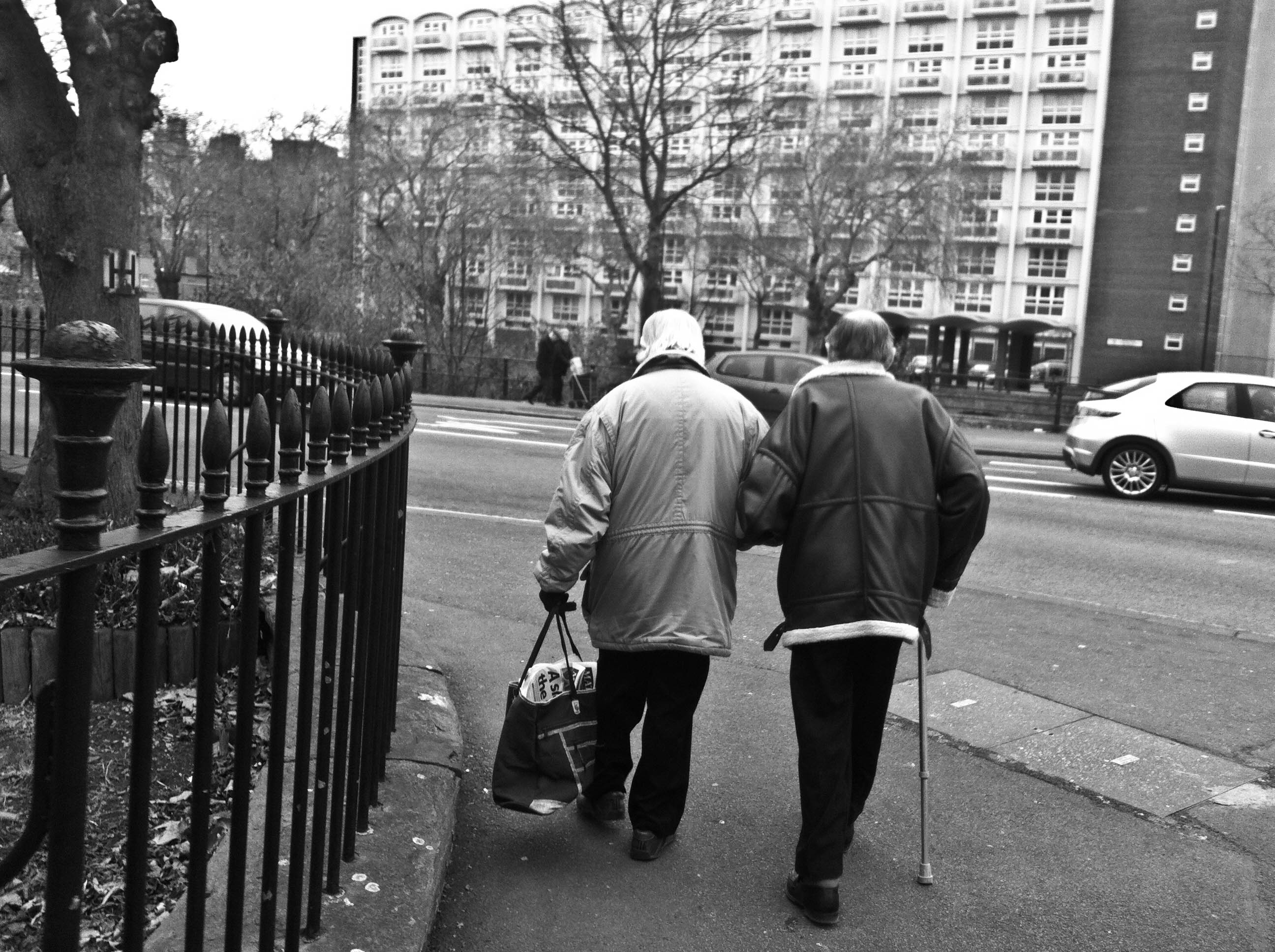
Photo taken by artist Franko B – the rest of the collection is well worth seeing:
http://www.franko-b.com/gallery/photography/g_photography27.htm
A trip on the Mayflower..
Back in August I went for a jaunt on a steam tugboat courtesy of M-shed. It had been on my mind to investigate it after hearing that the boat (called Mayflower) was available for tourist trips. Built in 1861 she was giving tours of the docks for selected weekends over the summer.
I grew up in ex dockyard town (Chatham, in Kent) worked in Gloucester for four years and am now living in Bristol, so docks and boats have always had a special meaning for me. Whilst tourism will never fully compensate for the scale of industrial decline in many dockside areas, it can often be one small way of raising money to try and preserve these vessels which are important aspects of our industrial heritage.
The trip lasted for around half an hour and it was fascinating to have a nosey around below deck. Additionally the crew were brilliant – charming, knowlegeable and we had some really interesting conversations about tugboats, Banksy and the meaning of art to cities and individuals. In fact I nearly came away with a new husband!! 😉
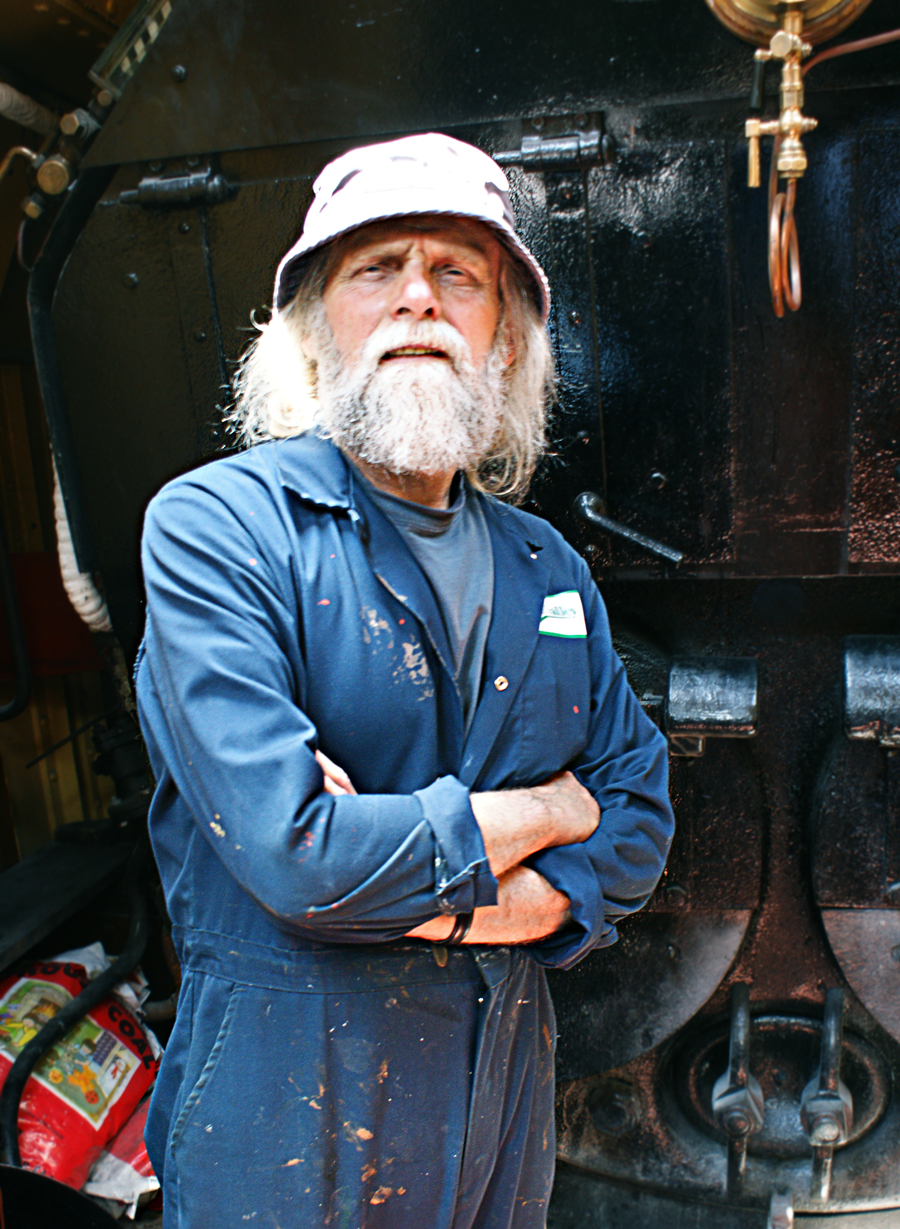
The trip was also significant as it was my first go with a borrowed SLR. Some of the photos didn’t turn out that well due to my unfamiliarity with the camera, but Mayflower seemed a fitting subject for my next photographic step. My favourite photo of the day is below.. My first attempt at real portrait photography. More photos can be found here
All in all a great trip – try it out next summer if you get the chance. Thanks M Shed!
Adventures in film – Untitled 1.2
Photography is one of my favourite pursuits, and recently I have been thinking about beginning to shoot film. Also being a fan of collage, the idea to put together some kind of filmic collage is something that has been whispering to me for a few months. I recently discovered that doing this is actually an art form otherwise known as visual poetry .
Anyhow I was walking in Victoria Park recently when a strange bunch of balloons appeared from nowhere. Having established it was not a some kind of UFO or seemingly attached to any event or child I watched them for a few moments blowing in the wind. Probably influenced by the film American Beauty I was compelled to film them. The raw footage I uploaded to my you tube account but a very talented film maker Adam York Gregory kindly edited the footage for me. The results of my first efforts below. I’ve got lots of things to learn, and I’m really excited about the new possibilities that come with this medium. I hope you get something out of my/our first brief venture – Enjoy 😉
Posted in Society and Community
Tagged Adam York Gregory, Balloons, Film, Victoria Park
Flying awkwardly: a year in the life of a first year PhD student.
‘Successful post graduates emerge with a new identity as competent professionals, able to argue their viewpoint with anyone regardless of status, confident in their own knowledge but also aware of its boundaries…to arrive at this point, is what being a postgraduate research student is really all about…’ Phillips & Pugh, 2005
I’ve started, so I’ll finish…. Magnus Magnusson
‘Academia: It’s like negotiating the land of OZ ……minus the good shoes’ Webber, 2011.
One year on…
I’ve had some time off from my blog due to work commitments recently and writing this next entry has proved to be a bit of a challenge to produce. Coming to the end of the academic year, and having recently passed my first year progression exam the time is right to reflect on my experiences and attempt to evaluate as reflexively as I can, what’s worked well and also not so well in order to improve and or maintain my performance and experience for the coming year. One thing I am often told is that a PhD is a journey, so as such, this account resembles a snapshot of that journey, taken at a particular point in time. Perhaps my perspectives and opinions will change as I progress. Perhaps they will become more engrained. Who can tell? Overall, I have mixed feelings at the end of year one, and if this was an ofsted report, I would probably grade this year as ‘satisfactory’. Here’s why:
Great expectations..
So, over 365 days have passed since my application for voluntary redundancy was accepted and I left my consultancy job for a life in academia. After two refused funding applications and many years of wanting to undertake a PhD I arrived at my desk in the Autumn of 2010, full of enthusiasm and high expectations for what was to come and a clear idea of what life as a PhD student would be like. I had envisioned something which was not in retrospect, exactly that realistic.
I had imagined academia as a world of dynamic modern creatives, striving together to battle the ills of society by attempting to solve or draw attention to its shortcomings. Motivated by a passionate and relentless shared altruistic desire for the pursuit of knowledge and together working in a close team in an environment of trust, my supervisory team (perhaps in the manner of the A-team, or the outlaws of Sherwood forest or similar) together with my supervisor (who could impart a wealth of knowledge about my study and was perhaps a combination of Mr/s Majeika and say, Yoda) would form a band of scholarly rebels an together we would embark on investigation of my research topic, in the manner of an apprenticeship perhaps not dissimilar to those taken by Jedi Knights or Starfleet cadets, which eventually after three joyful years, enabled academic enlightenment which would then be passed to me. Of course all this would be supported by numerous mindbending, stimulating philosophical and theoretical conversations with my peers around life, death, love and the universe carried out in the bar until the early hours of the morning. I might even be able to impart my existing knowledge and experience on a group of bright eyed and bushy tailed students.
Okay so I’m exaggerating slightly in the account above but it’s true to say the reality of academia has not stood up to my initial ideals, which has led me to a lack of motivation in terms of my research, however it’s also fair to say the year has not been without its notable achievements.
The good
So what positive things can I take from this year? Just being here I guess is one. The landscape of higher education is undergoing radical change and having a scholarship to undertake PhD training is likely to become even rarer in the times to come. Like most people I certainly would never have been able to afford it otherwise. Undertaking a PhD will enable me to benefit society, develop new skills, gain a qualification and change my career direction.
On a practical level having the flexibility to manage your own time is a major perk, as is the chance to be completely selfish in terms of your own training. The opportunities for real development at my previous organisations were reasonably limited. This year I have undergone a great deal of training which I just wouldn’t have been exposed to otherwise. I’ve completed 90 credits (three) masters level research modules and undergone valuable additional skills training via seven short courses or workshops which support my development as a social researcher. I’ve attended nine professional/academic conferences and presented my previous MSc research at three of these, which are all at an international level.
I’ve made some amazing friends, been a representative on the postgraduate research (PGR) students committee and volunteered to represent the PGR students at faculty research degree board committee meetings. I assisted in organising the annual PGR student conference and was awarded a first prize for my presentation. Having had a ten year break from any kind of performing, I joined the UWE Centre for Performing Arts (CPA) and auditioned (successfully) for a UWE music scholarship. I then undertook formal singing lessons and I am preparing for my grade 8 musical theatre exam in November. I was genuinely surprised to be cast as a principle role in the university musical (also a journey in itself) which enjoyed a sell-out run at the Redgrave Theatre, Bristol and over the year, in my role as a CPA scholar, I have supported the CPA by singing or giving readings at (approximately) ten public concerts.
I’ve learnt a lot about myself. That sounds dramatic but it’s true, in ways that I couldn’t have anticipated. My skills are improving, although this has been a slow process. Whilst it is a continuing source of worry and bone of contention surviving on a budget has made me richer in other ways. It’s surprising how your identity can develop through creating, observing and appreciating things when you get off of the conveyer belt of consumption that blinds you to them so easily. It’s easy to think when you have been used to earning a certain income that when your circumstances change and you stop work that the world may end. It doesn’t. You have to find a way to adapt, reassess, negotiate but somehow life has gone on. I’m still here. Slightly shabbier looking, a bit fatter but mostly smiling and often covered in paint or glue rather than the trendy (ish) labels.
The bad
So. Where did the struggles occur? For me, concerns began to arise from the outset, as I had not been consulted regarding the appointment of my supervisory team, all of whom seemed excellent academics but I had not been assigned anyone that had in-depth knowledge of the theory I wished to draw upon, or any experience or knowledge in the methodology I wished to use. This has been an ongoing concern and I am told will not be resolved due to resourcing issues.
As I mentioned before expectations were pretty high when I arrived and certain things disappointed me, aspects of the process sometimes seemed ridiculously old fashioned and not the best way to get the best out of students. Some senior academics seemed incredibly blinkered, demonstrating clear bias toward method, philosophy or approach and disparaged the work of their well respected colleagues. All of which is apparently common in academia but not something I had expected or respected. I sort of found it unprofessional and again, old fashioned. Interdisciplinary postgraduate training had previously taught me to have an open mind to various approaches and it came as a complete shock to find that generally this didn’t seem the case in reality. Don’t get me wrong, academics are incredibly exceptional people but I was wondering that if arguing a particular thesis so repeatedly throughout your career actually makes you more blinkered? I lost motivation and the academic pedestal begun to waver as I questioned ‘was I ready to become that narrow minded? The only thing my years of education had taught me was that none of us really ‘know’ anything at all, but it was like nobody actually wanted to admit that. Instead, flags waved from methodological and philosophical islands, and the reality was far different from that I had hoped for. Beneath that I felt was fear and insecurity of difference and the unknown.
Suddenly, the emperor was before me, and I could see his dangly bits.
My poor supervisor didn’t live up to my expectations either. I am his first PhD student and it often felt like a case of the blind leading the blind particularly in the early months. He is just a few years older than me, and is very nice and kind and we drank a lot of coffee, tweeted and text and ate cake and everything was fine. Fine for months. He was very reassuring, there was no nagging and he often wrote/re-wrote chunks of my text for me. As every PhD student-supervisory relationship is different I didn’t question it, until eventually I began to wonder if that’s how everybody else’s meetings went. Turns out they didn’t, and I don’t think things are ever supposed to be ‘fine’ until that last draft has finally been submitted. So we have to renegotiate the way things are done. No doubt I’ve done nothing but complain and kick and harass various members of staff this year over various things and they are probably all enjoying the break from the crazy Webber girl.
I found the monthly meeting process in general difficult – (this I have been told is in part due to my lack/volume of written output which is a fair criticism). The initial meetings seemed rather odd almost like a kind of role play at times.. (cue schizophrenic breakdown as I began to question the reality of the situation – am I in a play within a play?) I was told I was not playing the ‘game’ several times. Which was somewhat confusing for me as I felt I was there for a meeting about my project, and it’s a bit rubbish if I don’t know what the rules are and no one tells me. As Phillips & Pugh (2005) state above, a large part of the PhD process is learning how to negotiate and present your argument with those of high status. So, part of this meeting process involves the big-wigs belittling you as best they can so you can get used to responding in a professional way. I think I’m okay with criticism if the point made can be fully justified, but I have struggled with the way it has been delivered. Currently the sneeryness has me yo-yo-ing between wanting to give two types of responses a) melting into a tearful heap on the floor screaming ‘high status suity man, your words, how they burn’ or b) jumping around throwing tables out of windows shouting ‘come and ‘ave a go if you think you’re ‘ard enough’. Again this type of questioning encouraged a lack of motivation not just because it wasn’t particularly pleasant but also it seemed poorly justified and old fashioned. What exactly is so special about academics/academia which qualifies them to behave in a way which would ultimately be seen as unprofessional in commercial or other types of public practice?
The epiphany…
Oddly enough one of the most difficult things I have struggled with is almost an existential one. Often people say that a PhD starts with research questions, but I say it starts with a person. The researcher. Whilst I’ve managed to pass my first year, my research outputs or study focus is not where it should be due to time lost. Whilst some commentators say this is due to too many other things going on, I attribute it to a basic loss of engagement and motivation due to a) strange relations with my supervisors and my own pre-occupation with my unhappiness about the process and b) having to negotiate this pending ‘new identity’ that Phillips & Pugh (2005) speak of.
I sat in front of a computer, staring at a blank screen unable to write for months before finally being signed off work with depression. It was through therapy (together with a two week arts intervention experience ‘The Fortnight Project’ which ran in Bristol as part of the ‘Mayfest’ theatre festival in May) that I began to explore my real motivations for doing a PhD – beyond that which was written on the application form or CV. Having got to know more and more students I discovered that behind each of them was a story. All of us were genuinely interested in our subjects and believed in what we were doing, but there was always something else. The expectations of a parent, or the rivalry of a sibling, the chance to escape domestic drudgery in a different country, avoidance of the ‘real’ world, the passions of a working class girl who saw the lawns of Cambridge one day and wanted a different life. There were many stories amongst the research proposals that were not always openly acknowledged. So what was mine?
I realised that education had mostly, done a lot for me on behalf of my parents, and I realise now that it’s how I learnt to grow up. So perhaps this is my final push to do that. I never really totally learnt how to negotiate problems, differences or defend myself well or speak my mind in all circumstances, or believe in myself enough to go for what I want. Perhaps I’m here doing this so I can finally learn. I’m also acutely aware of how, leaving school with just my few GCSES, that for seven years I was often treated as I were stupid, less of a person or (literally at times!) patted on the head and told a ‘girl like me’ wouldn’t need to go to university as I could just find a rich man.
The situation is also a bit of a double edged sword. The new PhD identity will obviously eclipse the old one.. but what will that mean in terms or how I relate to my family? With every course I take I am increasingly viewed as a strange and foreign entity and the title ‘doctor’ will be the final allienatory straw breaking the donkeys back. Whilst my family (complicated) are happy for me, they just don’t get it, or really believe in or value it. So which identify do I use when I’m a Doctoral graduate? The old one so I can relate to them, or the new one, when I can sneer alongside the best of high status professors? Fundamentally, I believe that people should be recognised for their achievements but I don’t really recognise the social hierarchy. Who am I to say that I am higher status due to those words ‘Dr’ before my name? In some way I almost felt guilty. If I go back to the Wimpy now, after however many years it is – am I really so different? and psssst…. most importantly – Am I going to end up being completely boring, wearing elbow patches with no idea how to be silly or fun or believe in anything without reams of ‘evidence’ to substantiate it? (oh okay that’s an exaggeration, no one really wears elbow patches anymore, and okay some academics are fun (my supervisor is that’s half our problem)
The future
So. It seems I have passed my first year, although it’s not been without incident or a few pilot weeks on prescription drugs (I had a bad reaction to them and gave them up for art and theatre instead) I guess there is nothing else I can do but re-address my expectations of the PhD process, plan my next six months thoroughly, catch up to where I feel I should rightly be and try and hope things with my team improve (Although anecdotally it’s supposed to get really hard at this point). Having spoken to numerous PhD students and graduates it is fair to say none of them have really raved about the process and most seem, by the end of their projects to be bloody glad to be rid of their thesis. Academia is indeed a strange creature, and this odd, Oz like journey appears to be just as concerned with endurance and determination and negotiating relationships as it is with actual research. I decided that what I need to survive, (along with a sense of play and embracing creativity and art outside of work) is a mantra, thus quoted by Magnus above:
I’ve started… so I’ll finish.
(repeat twice a day, every day, until thesis completion)
However I feel, (good or bad) today, next week or this time next year, it won’t last forever – the time has flown and I received my bursary payment schedule recently and looking at those 24 payment dates …. well two years does not seem that long at all.
I’d better get on with it then.
(‘Flying awkwardly’ was also posted at SociologicalImagination.Org )

 Amy-Louise Webber