Category Archives: Theatre making, performance and process

Clowning Part II – end of course clown showing

Some photos from the first public Clown showing we gave in March – pre showing warm up workshop – more thoughts to come on the journey that was Clowning Part II but for now – here are the pics!  SO MUCH FUN!!!

Performers:  Alice Goodman, Amy-Louise Webber, Orla O’Carroll, Carlos Pulido, Nik Howden, Sara McCluskey, Tim Speight, Marcin Plocienniczak, Lucy Harrington (I love Lucyface), Phillip Hartland

Directed by Holly Stoppit

Photos taken by Paul Blakemore http://www.paulblakemore.co.uk

A certified clown!! the end of clowning part I

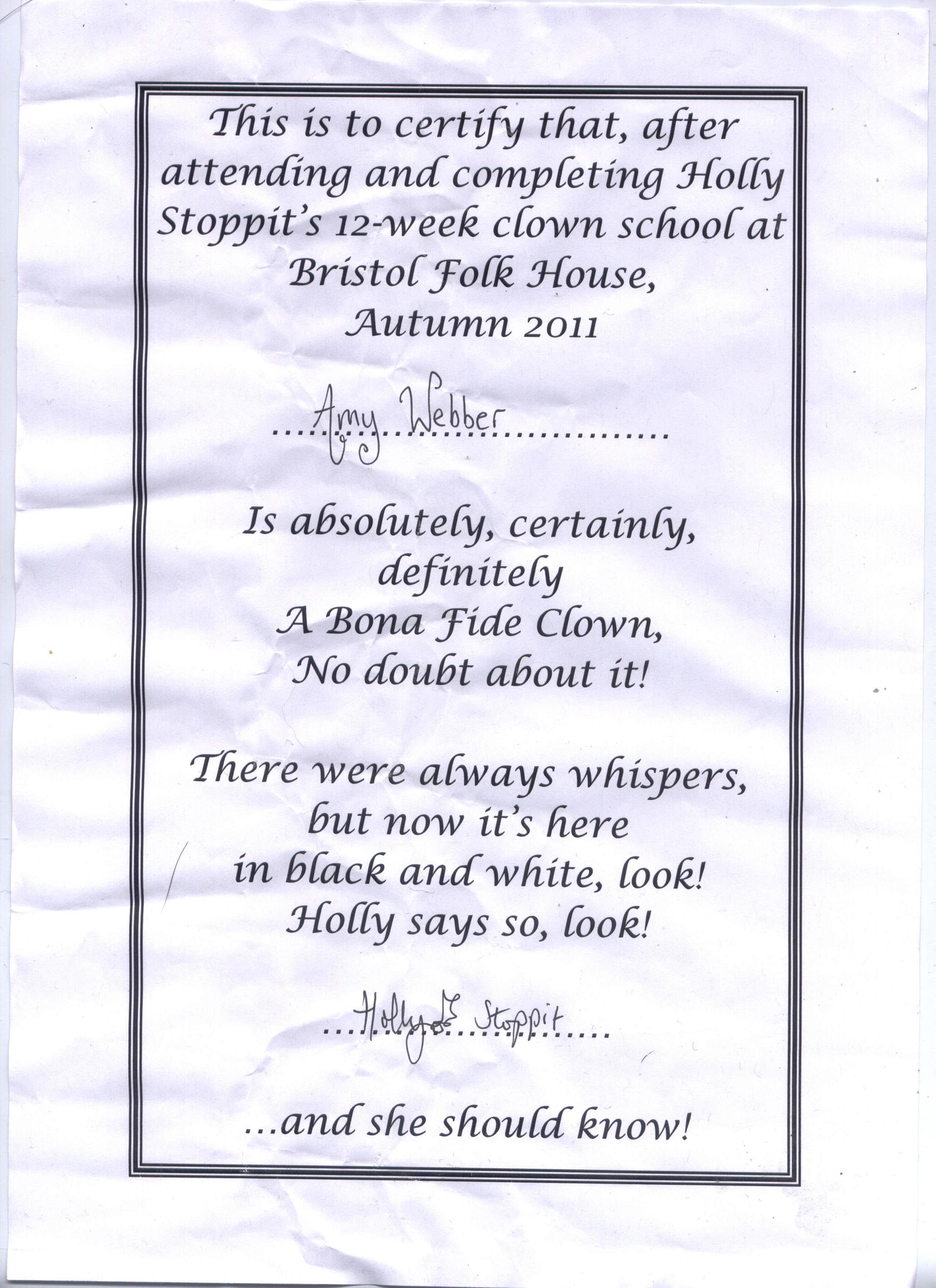
Today was officially the end of clown school.  Luckily I could make the lesson and I’m so glad I did.  It’s all a bit emotional for us clowns tonight. We have made such good friends and learnt so much about ourselves.  I will do a proper write up on my progress this year  just as soon as I have had some chance to reflect.For now here is my official certificate and feedback from the rest of my troupe as to how the other clowns viewed me or my memorable moments. I’m really looking forward to next term – getting up early to sign up at the folk house was a good ideas as all the places went within 24 hours! Four of my current troupe will joining a range of other stage II clowns next term. New playmates and it’s a mix of ‘professionals’ ’emergers’ and hobbyists!!!  Am I becoming clown dependent? ;-0

So thank you clowns and thank you Holly..for fun, trust, laughter, love, seeing and healing.


The clown who was not dead (or beginning adventures with my nose)

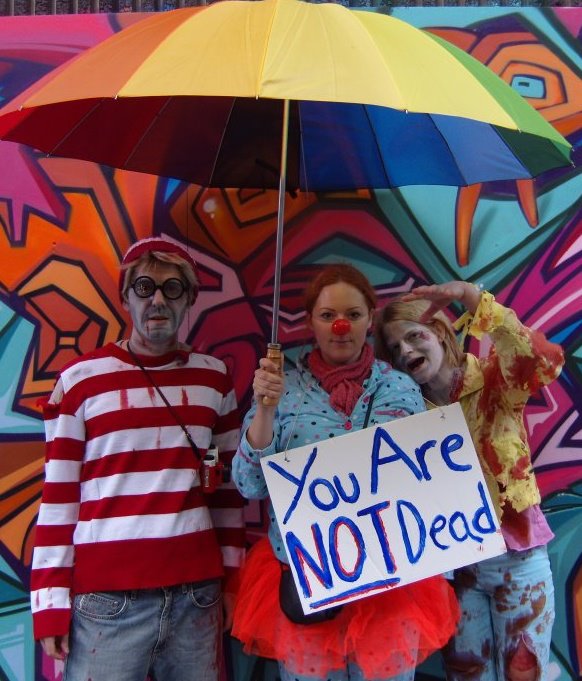
Ever since I started clowning I have been itching to take it outside the playspace. Just to see what happens. Quite sensibly our teacher hasn’t really discussed us taking our clowns outside  but today’s Zombie march seemed to good an opportunity to miss. So I went a bit feral and decided to take my clown to the streets of Bristol to see what if any reaction I would get and to practice my performance skills. I hadn’t done anything like this before, bar a stint in show promotions when I was younger which involved performing in costume and singing songs from our musical up and down Chatham high street whilst teenagers threw chips at us.

I decided to use the zombie march as it was a reasonably safe space to do something a bit out of the ordinary and to test reactions and audience interactions. The costume I put together was really a bit cobbled and could have been better – I wasn’t really sure what I was going for as long as it looked colourful and out of context against all the other zombies. All clown rules applied which was a bit confusing for others as I was only communicating using gesture, sound and eye contact.

Comments received from both zombies and zombie spectators:

  •  ‘Yeah thanks very fucking much for that’
  • ‘Whats that about?
  • Er?
  • ‘We really are dead, we are really really dead’
  • ‘Clearly you are not dead, are you’
  • ‘That’s awesome’
  • ‘Your sense of humour appears to be’
  • ‘What does it mean?
  • Is it about life?
  • Is it about how we should celebrate life?
  • An optimistic zombie!
  • Can I take your photo?

I think I probably learnt more walking on the way to the march than throughout it as I got more of an impression how people react to a clown in public. When set against the context of the zombie march it was easy to disappear amongst all the frenzied zombie activity, so at these times it seemed more sensible to be still and frozen in a high place or just to walk in a really calm manner so as to juxtapose the two types of activity. Normal clown behaviour (mimicry and play) was also often difficult as people were trying to act in the same way I struggled with coming up with anything that was more exaggerated than the existing performance.  I did manage to get a few laughs – specifically with some zombie morris dancers (my clown was a bit sulky in the morning as she felt her legs were not musical enough) so it was a lot of fun to find a group of jingly zombies and enthusiastically copy their dancing which they seemed to find hilarious – also I made friends with zombie clowns and also had a habit of following anyone carrying a similar umbrella to my own, much to the amusement of onlookers.  I made friends with a couple sitting in a street cafe and a number of children seemed to find my pranks quite funny.

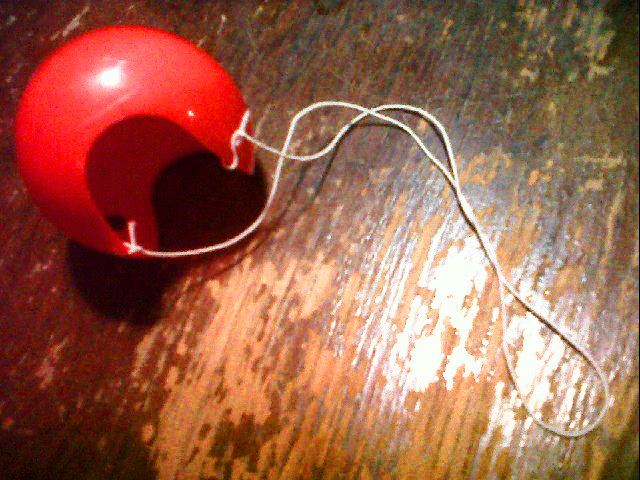
The march provided a halfway house to test out my performance ideas – the only downside was interacting with people that were out in our group or that I saw and knew – I couldn’t drop out of character until I took my nose off, but after a while they worked out what I was doing, and I stayed in clown for around 2.5 hours.

The event seemed to pass peacefully  – it ended in Castle Park and it was a shame there was no music or dancing after. Whilst I am conscious I have been neglecting my photography lately the chance to take my clown out was too much to pass up. That being said I did miss my little clown troupe. The reactions were interesting and certainly made me aware of how the same thing can be interpreted differently by people and that performing/art is going to attract an array of feedback, but as long as people have something to say or at least think about it then I am happy.

Clown is… (a reflection)

I’d already decided I was going to write up my thoughts on clowning so far, (based at the Folk House, Bristol and run by http://hollystoppit.com/) but the group exercise we did at the end of class prior to half term ended up as a great poem which pretty much sums up the views of all of us. So I am trying to think if there is anything else I could say.. ….So then I wondered which words would be the most effective at describing A) some of the things we get up to in clown class and B) my feelings about it, but I am learning that a lot of the times, words are not actually necessary.

Truth

I’d always heard lots about ‘truthful acting’, and I was trying to get my head around how this would be achieved given (I’d imagined) how exaggerated and slapstick clowning could be. Its true that action and reaction can often be bigger and played directly to the audience but I’m learning that authenticity is at the heart of the clown. For me, it is quite a profound thing to get in touch with your inner child, but I was surprised how strong and evident our individual personalities are underneath as we learned to (re) engage with our primary selves and each other.

Trust

This is something I have struggled with in other classes – the idea of benevolence is often encouraged but this is the first class where I have felt truly comfortable to explore every idea without being reprimanded or criticised. Often in a more traditional classroom or teaching environment I have often been self-conscious of exploring my ideas or too keen to please – both of these instincts have blocked both my creativity and my authenticity. Being in an environment where there is no pressure to produce but just explore, play and create actually means I am far more effective in what I/we create and in touch with myself than in a traditional environment. The role of the ensemble is central to the idea of clown and working together with other people in such a trusting equitable environment makes creating so much easier.

Trial without error

Experimentation without consequences has led to greater performance possibilities. Coming from a mostly traditional theatre background expression is something which can feel tightly confined within defined roles, structure and action. To take this framework away and combine approaches has opened up a world of both personal and performance opportunities – both physical and temporal. Exploring bodies, sounds, movements, emotion, space, colours, rhythm. I even became a chocolate eclair in one lesson! Making new stories from old stories and building stories together – exploring what works and what doesn’t work…..S-T-R-E-T-C-H.

Presence

Presence is something that is also central in clown class. The idea of being present in the moment is something I find hard to do – I’m always busy or worrying about the day job, things I need to do. I’ve always found meditation, relaxation or maintaining my focus or attention on things difficult but in clown class its a lot easier. Additionally from a concentration perspective it encourages us to be present at regular intervals as well as at the beginning and end of a session which I found really helpful.

Humanistic

My favourite thing about clowning is that it is transferable. Skills learnt in clowning can bleed into ‘everyday’ life..but more than that the clown transcends normal barriers, language, class, race, as the simple common stories are played  out. No sets, no scripts. You could go anywhere in the world, spread happiness to people who need it and make people laugh. A universal language. No words necessary.

So. After six weeks of our course, the story so far is that clowning is….

well.. that’s the whole point really…

It just is.

(and life is better for it)

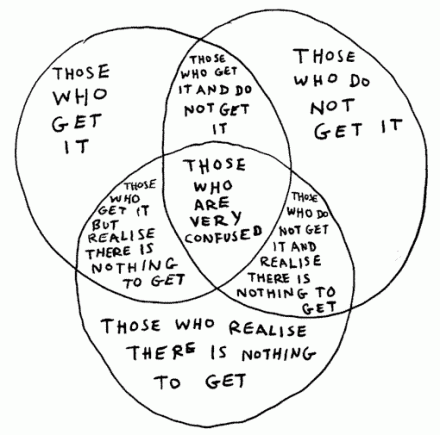
Get it?

IHAVENOIDEAWHATYOUARETALKINGABOUT  

www.sociologicalimagination.org

Clown is… (a poem)

More thoughts to come from me shortly on clown class, but I just got this through and had to share it. Our lovely teacher Holly Stoppit http://hollystoppit.com/  put together a poem from our thoughts and feedback on the first six weeks. It’s half term this week. No class!! What will we do??!! *gasp*

Clown is…

Clown is much better than real life.

Clown is simple, honest chaos.

Clown is creative, positive focus.

Clown is uncensored, flexible silliness.

Clown is a philosophy.

Clown is a lifestyle.

Clown is a social moooovement.

We move, we jump, we leap, slide and roll,

Dancing and singing our way to presence.

Being present.

We clown from da gut,

From our Instinct

and intuition.

There we find truthful stillness

And spontaneous release

We are the Jackass Monkey

Bending the rules

And our legs

We are the Fruity Lizard,

Not trying,

Just relaxing

In the moment.

Clown is the lowest form,

Yet it’s harder than it looks

Clown is engaging, connecting with others,

Clown is pure raw vulnerability

Clowns try to be brave,

Stand tall, let go.

Clown is bruised and happy knees.

Clown is tribal, experiential, conceptual,

Clown is boing boing boo bah boo

With splongelicious playfulness

Clown is all about

Learning

About

You.

Clowning is best when not forced,

Unless forced is funny.

So clowning is going with whatever works,

Looking into each others eyes

and feeling

Whatever

We

Feel.

Then playing.

There are rules,

But rules

Can be played with,

Then tampered with,

Then thrown out the window

For

A

Laugh.

Ha ha.

Clowning is laughter

Released by sharing

Our authentic, subversive Selves with others.

Together we dive into the unconscious

In search of the inner child.

Together we side-step the inner critic,

Gaining freedom and energy

To be as daft as we really are.

We don’t know where we’re going,

But that’s OK!

We are a team,

United by our noses

And a thirst for fun

And friends

To inspire us.

(by Holly, Nick, Tripper, Amy, Ollie, Jules, Alice, Phillip, Carlos, Pawlala, Garath, Rachel)

Investigating social enterprise..

This idea has not gone away. Some great resources developed by UWE for vitea (be inspired):

Be present. Notice. Have a dream. Vitea Leadership in Action March 2011

Where are you going? – How will you get there? – Who will help you?

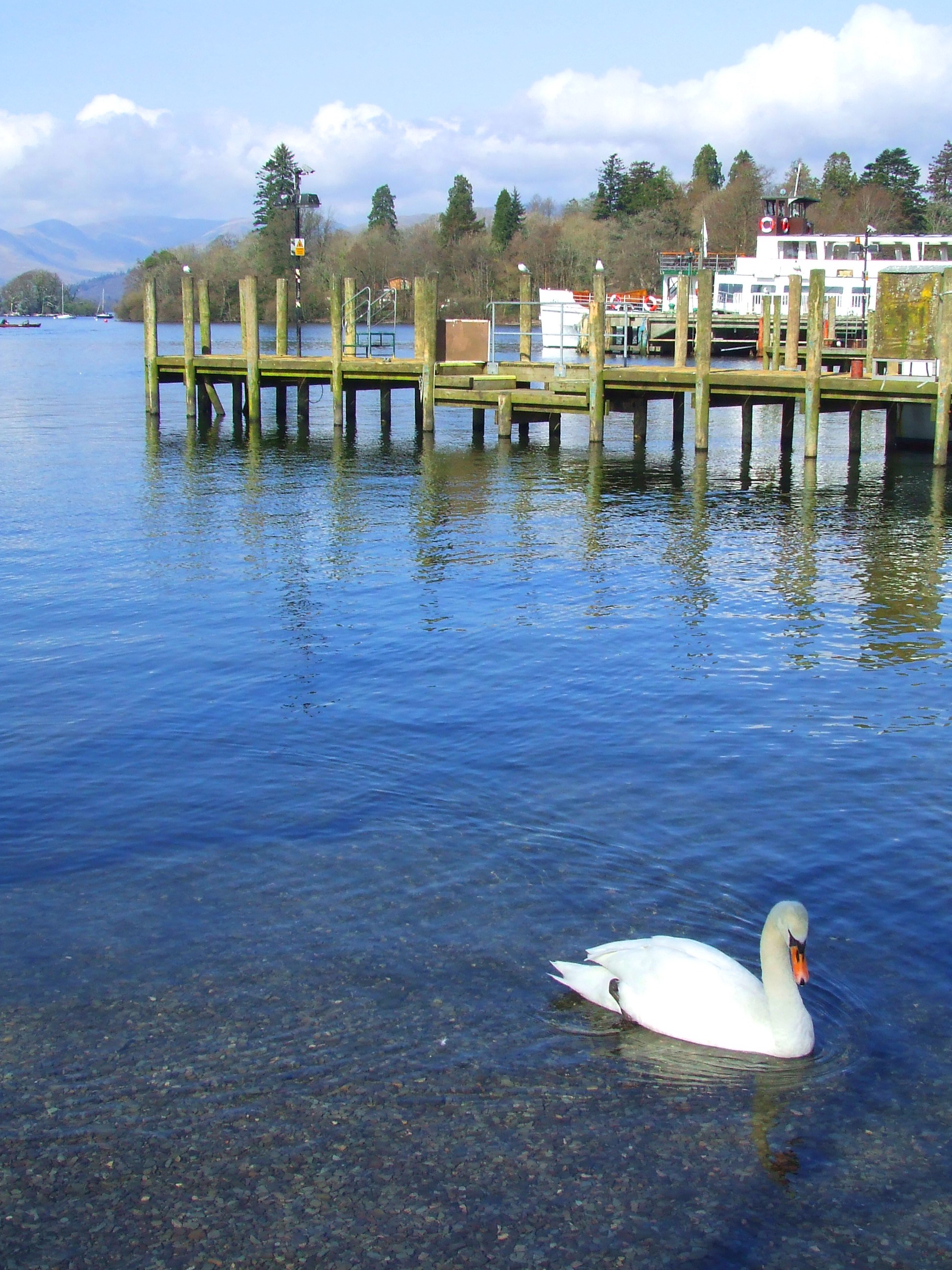
These are question we were asked at the culmination of an intense three days in Windermere, and what a three days it was.  Twice a year a combination of 60 students and research staff at various stages in their careers and spanning all disciplines, are selected to attend the free residential leadership courses on offer by Vitae the research training council. This year I was privileged enough to be selected for this prestigious course and  apprehensively made my way to the beautiful surrounds of Lake Windermere for what was a significant learning and existential experience.

Taking a ‘learning by doing approach’ the course was divided into seminars, practical workshops, and home group activities. Over the course of three days we were challenged to lead, reflect, learn, experience and work as a team. Whilst a variety of theoretical perspectives exist, a key emphasis of the course was experiential learning, and we were continually split up into changing teams and faced with various challenges. I ended up leading two tasks (one through delegation) these were managing multiple tasks and leading in a crisis. Multiple tasks was quite a challenge and we failed to achieve the full points. It was a little disheartening and the skills involved blindfolds, sculptures, quizzes etc etc.. Leading in a crisis was where I really felt I shone and we managed to perform well. We were assigned a buddy – often from a completely different background (mine was a middle aged, Chinese engineering professor from Oxford who had been sent on the course because he had poor relationships with his students) The buddy would then act as a ‘mirror’ and provide 360 degree feedback on performance and a sounding board for reflection.

A key learning point for the course was the power of failure. Most tasks were pretty difficult to achieve and through our efforts we encountered both obstacles and triumphs.  We were advised we would both succeed and fail spectacularly. This was appropriate. This did show me that there were still things to be gained from situations that turned out badly, that it wasn’t how many times you failed but how many times you got up again.

In addition to the workshop we were assigned a home group task. In groups of six were assigned the challenge of delivering a fund raising initiative in just three days. We were given the sum of £100 and told to devise and initiate a campaign for a charity of our choice.  All teams were to present on the final night, and were assessed against a range of criteria with a winning team being announced and prizes given.

I was lucky enough to have a great team, who worked hard to get our idea up and running. Having been assigned the team leadership role I was extremely proud three days later when our idea: Webber’s Windermere Womble’s – we were raising money for the organisation shelterbox,  and won the challenge overall out of ten other teams, (with the help of some litter picking efforts and the use of social media) Whilst we didn’t reach our target the sum of £320.00 in less than three days was a good effort and the highest total overall, and our concept made a contribution to both local and global needs.

I signed up for the course I guess because I was never sure if I had the power to lead others. Somehow I often ended up sort of leading people, but I had never really pushed myself forward consciously. The course was an intense, challenging and exhausting three days. However I learnt a lot about myself. The feedback helped me to learn that sometimes I know what’s in my head, but other people sometimes don’t.  It taught me to try and draw on others and trust people rather than always doing things myself. It also taught me that in teams people have different needs and not everyone responds well to my creative, energetic autonomous approach to leadership if they are happier with security, certainty and direct instructions.

It also showed me that there are lots of things about me that make me an effective leader. Like the ability to motivate and inspire others, to support and energise, to see the bigger contextual picture and to supply vision. Luckily I had people in my team with opposite skills to my own which is also what made us so successful I think. Fundamentally, and perhaps most significantly the course taught me about the power of collaboration. We were from different backgrounds, perspective, experiences, and often cultures. Yet we came together and achieved. That was probably the biggest lesson. Our team didn’t spend our start up money yet through teamwork we managed to create and succeed with our existing resources – people.

There a lot of people who are often closed minded to this sort of approach – workshops, integration, random tasks. It requires faith, trust and buy-in to get anything back from it, but if you do I’m sure you will think its worth it.  In fact it was a challenge in the first few days to convince my buddy professor to listen to me. He spoke often of how stupid his students were and how he was frustrated with them. After three days with me.. (stop sniggering at the back)  he actually began to reconsider the ‘youth’ of today in a different light..to think differently, and to appreciate the person behind the ‘student’ role. In turn he taught me that whilst being ‘old skool’ there was a lot of wisdom, commitments and dedication behind the communication struggles. He was a gentler person. So was I. Once the course was complete I took a few days in the beautiful lakes to reflect on the experience. The Wombles have since disbanded but I’m still in touch with a few of them.

So, three months down the line is the experience still with me? I think yes. The course taught me that I have leadership potential, but that I won’t get there on my own. I’ve been increasingly thinking about the possibility of social enterprise, and this is not something I would have had the confidence to consider before the course. It made me realise that my pre-occupation with the potential for failure actually often prevents me from achieving or producing things. Most importantly, however my PhD works out, I think the principles we learnt on the course are transferable enough to benefit multiple aspects of my life. Being a PhD student is not just about writing and defending a thesis. The course should me how much potential all of us had to lead inspire, achieve and support each other and to achieve for the good of society regardless of our disciplines.

It made me proud of the people that I met, and proud to also be one of them. One of the best experiences of my university career for sure.

Writing on the body at the Arnolfini

In January I bravely signed up for ’Writing on the Body’ . Led by Dr Barbara Bridger from Dartington College of Arts, a two day workshop at the Arnolfini. I’m from a social science/studies background, and I was curious to understand what the arts could offer in terms of cultural theory and interpretation of this notion of ‘the body’. I’d previously studied as part of my first degree the sociology of the body and I was interested in thinking about ageing bodies is in relation to my research. I was hopeful that the course would perhaps stimulate my thinking in a different way. So. Being brave. I wandered quite naively into the room ever the optimist.

There was some background theory – some basic Derrida which was great and a reminder of how despite how disciplinary boundaries may be defined – fundamentally the thoughts and thinking of key theorists along with political, social and cultural changes often permeate the teachings of both the social sciences and the humanities. Although there may be some way to go before philosophy dribbles into the teachings of pure science though? Or maybe not?

It was a good workshop. Scary but good. I was introduced to a range of textual practises and ways of writing for the body. To be fair I hadn’t anticipated the amount of practical work we were expected to do. This element was totally new to me.  Not being an artist or at least not being anything like one for a number of years I was totally unprepared for the level of self exposure (maybe not the right word – maybe self expression) that the practical element expected. Suggested practical tasks were things such as: photographing your body and using post it notes to tell a story of you (such as scarred bodies), writing the story of a body part on a piece of paper and burning it, or making an artwork using your own bodily fluids (the tutor re-laid a story of one of her former students cutting herself during a performance. We were not specifically encouraged to do this but I got the distinct impression that the tutor sort of maybe felt that the student concerned was within her rights to do so.  Interestingly I had also heard a rumour through drama students at my current university that a similar thing had occurred during a performance for an avant-garde module, and the result being the performance was stopped.   This raised an interesting ethical dilemma for me, I have not seen enough theatre to comment on any specific performance but in terms of pedagogy – where do you draw the line?

The body is a form of expression not just in performance but in everyday life – through the embodiment of physical actions with signifying meanings, through conscious self expression or display (tattoos, hair dye, piercings, cosmetic surgery etc) and the ongoing societal struggle and scientific quest to halt or delay the ageing process. Bodies are places of struggle, they are canvases and are often key signifiers to others of our place in society – disabled bodies for instance. What is *normal* v’s what is *different*  what is our attitude to live bodies vs dead bodies? Where does the person end and the body begin? What is viewed as more preferable old body or a young body? Why?

We also go the opportunity to look around the exhibition on the same theme which had some breathtaking exhibits, which certainly made you think about the body in a different way. It was a great experience for me to go round in a group and discuss responses to the pieces as I I’ve often no idea really (or felt a little bit of a luddite) sometimes around visual modern art. I’m getting there (I seem to be better with sculpture than paintings in this respect).

What I did notice sadly though was the absence of ageing related exhibits, examples and theory in both the literature, the workshop and the exhibition/examples we were shown.   So whilst this issue of the body appears to be alive and well in sociology and the arts, the issue of ageing has yet to be explored or represented thoroughly perhaps in both disciplines.. and ageing and transport? Nonexistent.

I’ll give it a go.

I didn’t get around to producing any practical pieces, and I was unable to attend the second day as I had a rehearsal. I was also really rather glad of this, to be honest I was terrified.  But perhaps I will revisit that list at some point. I have had a few ideas since then (mainly relating to the commodification of the body) that I could explore.

Another thing that struck me was how overwhelmingly introverted or (can I say it) navel gazing I felt it was… I guess my attitude has always been that any inner turmoil is (was) what it is, but there is always a worthier story to tell than mine. A bigger cause than any anecdote about my own suffering. Perhaps I just wasn’t angry enough?  Take Tracy Emin. She has suffered. She has produced some great art. But blimey O’Riley sometimes I just think ‘get over it’. Perhaps the subject is not her. I sort of think it is though? It seems epistemological (subject/object?) debates are central perhaps to artistic production and interpretation just as they are in qualitative research.

Similarly my in research, there are some authors who,  using ethnography, have endeavoured to reveal the nature of transport spaces through observations, but ultimately what I hear in the final write up is the voice of the researcher, not the observed. Is it not more powerful to give voices to others to enable them to tell their own stories? I don’t know enough about art or performance yet to answer these questions (both why and how) but at least for research to a greater degree as possible, the story is about them, facilitated by me. I will never be able to truly understand the meanings associated with older people’s experiences and how these experiences affect and impact on them both physically and psychologically, but I can attempt to find a way to reveal the stories of the people I meet if it is simply not possible to empower them to tell their own.