The clown who was not dead (or beginning adventures with my nose)

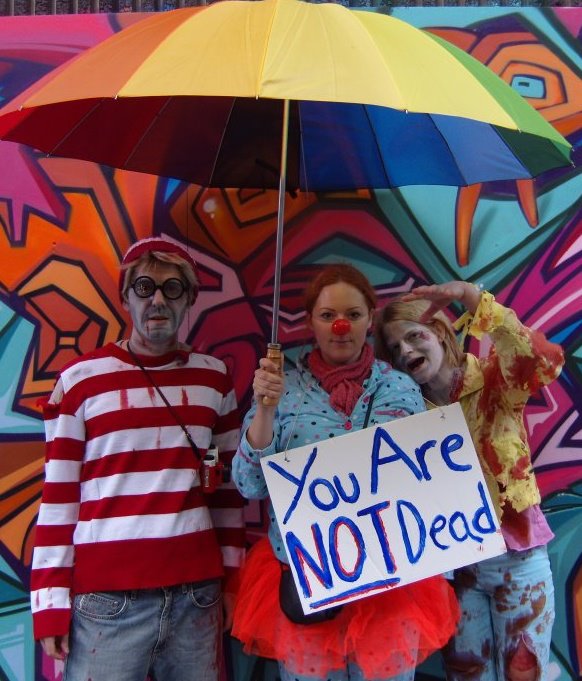
Ever since I started clowning I have been itching to take it outside the playspace. Just to see what happens. Quite sensibly our teacher hasn’t really discussed us taking our clowns outside  but today’s Zombie march seemed to good an opportunity to miss. So I went a bit feral and decided to take my clown to the streets of Bristol to see what if any reaction I would get and to practice my performance skills. I hadn’t done anything like this before, bar a stint in show promotions when I was younger which involved performing in costume and singing songs from our musical up and down Chatham high street whilst teenagers threw chips at us.

I decided to use the zombie march as it was a reasonably safe space to do something a bit out of the ordinary and to test reactions and audience interactions. The costume I put together was really a bit cobbled and could have been better – I wasn’t really sure what I was going for as long as it looked colourful and out of context against all the other zombies. All clown rules applied which was a bit confusing for others as I was only communicating using gesture, sound and eye contact.

Comments received from both zombies and zombie spectators:

  •  ‘Yeah thanks very fucking much for that’
  • ‘Whats that about?
  • Er?
  • ‘We really are dead, we are really really dead’
  • ‘Clearly you are not dead, are you’
  • ‘That’s awesome’
  • ‘Your sense of humour appears to be’
  • ‘What does it mean?
  • Is it about life?
  • Is it about how we should celebrate life?
  • An optimistic zombie!
  • Can I take your photo?

I think I probably learnt more walking on the way to the march than throughout it as I got more of an impression how people react to a clown in public. When set against the context of the zombie march it was easy to disappear amongst all the frenzied zombie activity, so at these times it seemed more sensible to be still and frozen in a high place or just to walk in a really calm manner so as to juxtapose the two types of activity. Normal clown behaviour (mimicry and play) was also often difficult as people were trying to act in the same way I struggled with coming up with anything that was more exaggerated than the existing performance.  I did manage to get a few laughs – specifically with some zombie morris dancers (my clown was a bit sulky in the morning as she felt her legs were not musical enough) so it was a lot of fun to find a group of jingly zombies and enthusiastically copy their dancing which they seemed to find hilarious – also I made friends with zombie clowns and also had a habit of following anyone carrying a similar umbrella to my own, much to the amusement of onlookers.  I made friends with a couple sitting in a street cafe and a number of children seemed to find my pranks quite funny.

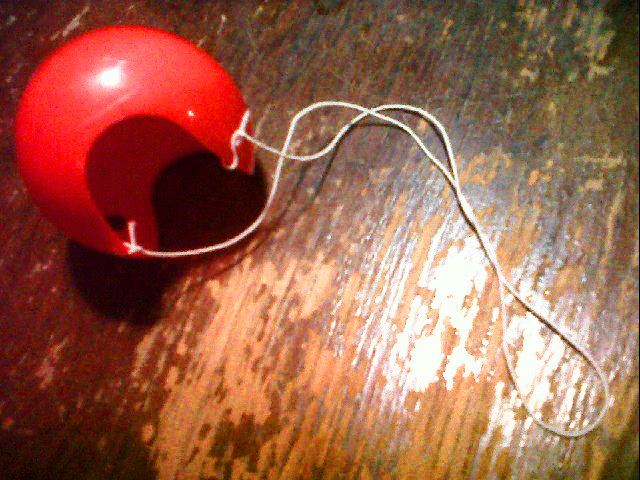
The march provided a halfway house to test out my performance ideas – the only downside was interacting with people that were out in our group or that I saw and knew – I couldn’t drop out of character until I took my nose off, but after a while they worked out what I was doing, and I stayed in clown for around 2.5 hours.

The event seemed to pass peacefully  – it ended in Castle Park and it was a shame there was no music or dancing after. Whilst I am conscious I have been neglecting my photography lately the chance to take my clown out was too much to pass up. That being said I did miss my little clown troupe. The reactions were interesting and certainly made me aware of how the same thing can be interpreted differently by people and that performing/art is going to attract an array of feedback, but as long as people have something to say or at least think about it then I am happy.

Clown is… (a reflection)

I’d already decided I was going to write up my thoughts on clowning so far, (based at the Folk House, Bristol and run by http://hollystoppit.com/) but the group exercise we did at the end of class prior to half term ended up as a great poem which pretty much sums up the views of all of us. So I am trying to think if there is anything else I could say.. ….So then I wondered which words would be the most effective at describing A) some of the things we get up to in clown class and B) my feelings about it, but I am learning that a lot of the times, words are not actually necessary.

Truth

I’d always heard lots about ‘truthful acting’, and I was trying to get my head around how this would be achieved given (I’d imagined) how exaggerated and slapstick clowning could be. Its true that action and reaction can often be bigger and played directly to the audience but I’m learning that authenticity is at the heart of the clown. For me, it is quite a profound thing to get in touch with your inner child, but I was surprised how strong and evident our individual personalities are underneath as we learned to (re) engage with our primary selves and each other.

Trust

This is something I have struggled with in other classes – the idea of benevolence is often encouraged but this is the first class where I have felt truly comfortable to explore every idea without being reprimanded or criticised. Often in a more traditional classroom or teaching environment I have often been self-conscious of exploring my ideas or too keen to please – both of these instincts have blocked both my creativity and my authenticity. Being in an environment where there is no pressure to produce but just explore, play and create actually means I am far more effective in what I/we create and in touch with myself than in a traditional environment. The role of the ensemble is central to the idea of clown and working together with other people in such a trusting equitable environment makes creating so much easier.

Trial without error

Experimentation without consequences has led to greater performance possibilities. Coming from a mostly traditional theatre background expression is something which can feel tightly confined within defined roles, structure and action. To take this framework away and combine approaches has opened up a world of both personal and performance opportunities – both physical and temporal. Exploring bodies, sounds, movements, emotion, space, colours, rhythm. I even became a chocolate eclair in one lesson! Making new stories from old stories and building stories together – exploring what works and what doesn’t work…..S-T-R-E-T-C-H.

Presence

Presence is something that is also central in clown class. The idea of being present in the moment is something I find hard to do – I’m always busy or worrying about the day job, things I need to do. I’ve always found meditation, relaxation or maintaining my focus or attention on things difficult but in clown class its a lot easier. Additionally from a concentration perspective it encourages us to be present at regular intervals as well as at the beginning and end of a session which I found really helpful.

Humanistic

My favourite thing about clowning is that it is transferable. Skills learnt in clowning can bleed into ‘everyday’ life..but more than that the clown transcends normal barriers, language, class, race, as the simple common stories are played  out. No sets, no scripts. You could go anywhere in the world, spread happiness to people who need it and make people laugh. A universal language. No words necessary.

So. After six weeks of our course, the story so far is that clowning is….

well.. that’s the whole point really…

It just is.

(and life is better for it)

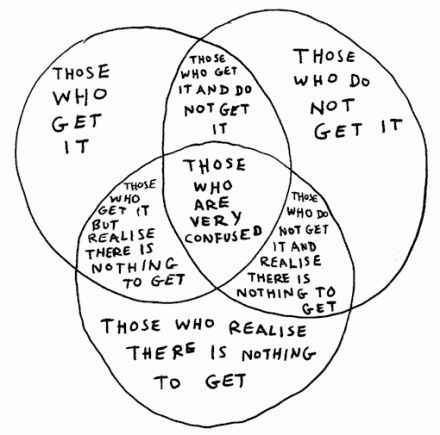
Get it?

IHAVENOIDEAWHATYOUARETALKINGABOUT  

www.sociologicalimagination.org

Clown is… (a poem)

More thoughts to come from me shortly on clown class, but I just got this through and had to share it. Our lovely teacher Holly Stoppit http://hollystoppit.com/  put together a poem from our thoughts and feedback on the first six weeks. It’s half term this week. No class!! What will we do??!! *gasp*

Clown is…

Clown is much better than real life.

Clown is simple, honest chaos.

Clown is creative, positive focus.

Clown is uncensored, flexible silliness.

Clown is a philosophy.

Clown is a lifestyle.

Clown is a social moooovement.

We move, we jump, we leap, slide and roll,

Dancing and singing our way to presence.

Being present.

We clown from da gut,

From our Instinct

and intuition.

There we find truthful stillness

And spontaneous release

We are the Jackass Monkey

Bending the rules

And our legs

We are the Fruity Lizard,

Not trying,

Just relaxing

In the moment.

Clown is the lowest form,

Yet it’s harder than it looks

Clown is engaging, connecting with others,

Clown is pure raw vulnerability

Clowns try to be brave,

Stand tall, let go.

Clown is bruised and happy knees.

Clown is tribal, experiential, conceptual,

Clown is boing boing boo bah boo

With splongelicious playfulness

Clown is all about

Learning

About

You.

Clowning is best when not forced,

Unless forced is funny.

So clowning is going with whatever works,

Looking into each others eyes

and feeling

Whatever

We

Feel.

Then playing.

There are rules,

But rules

Can be played with,

Then tampered with,

Then thrown out the window

For

A

Laugh.

Ha ha.

Clowning is laughter

Released by sharing

Our authentic, subversive Selves with others.

Together we dive into the unconscious

In search of the inner child.

Together we side-step the inner critic,

Gaining freedom and energy

To be as daft as we really are.

We don’t know where we’re going,

But that’s OK!

We are a team,

United by our noses

And a thirst for fun

And friends

To inspire us.

(by Holly, Nick, Tripper, Amy, Ollie, Jules, Alice, Phillip, Carlos, Pawlala, Garath, Rachel)

A trip on the Mayflower..

Back in August I went for a jaunt on a steam tugboat courtesy of M-shed. It had been on my mind to investigate it after hearing that the boat (called Mayflower) was available for tourist trips. Built in 1861 she was giving tours of the docks for selected weekends over the summer.

I grew up in ex dockyard town (Chatham, in Kent) worked in Gloucester for four years and am now living in Bristol, so docks and boats have always had a special meaning for me. Whilst tourism will never fully compensate for the scale of industrial decline in many dockside areas, it can often be one small way of raising money to try and preserve these vessels which are important aspects of our industrial heritage.

The trip lasted for around half an hour and it was fascinating to have a nosey around below deck.  Additionally the crew were brilliant – charming, knowlegeable and we had some really interesting conversations about tugboats, Banksy and the meaning of art to cities and individuals. In fact I nearly came away with a new husband!! 😉

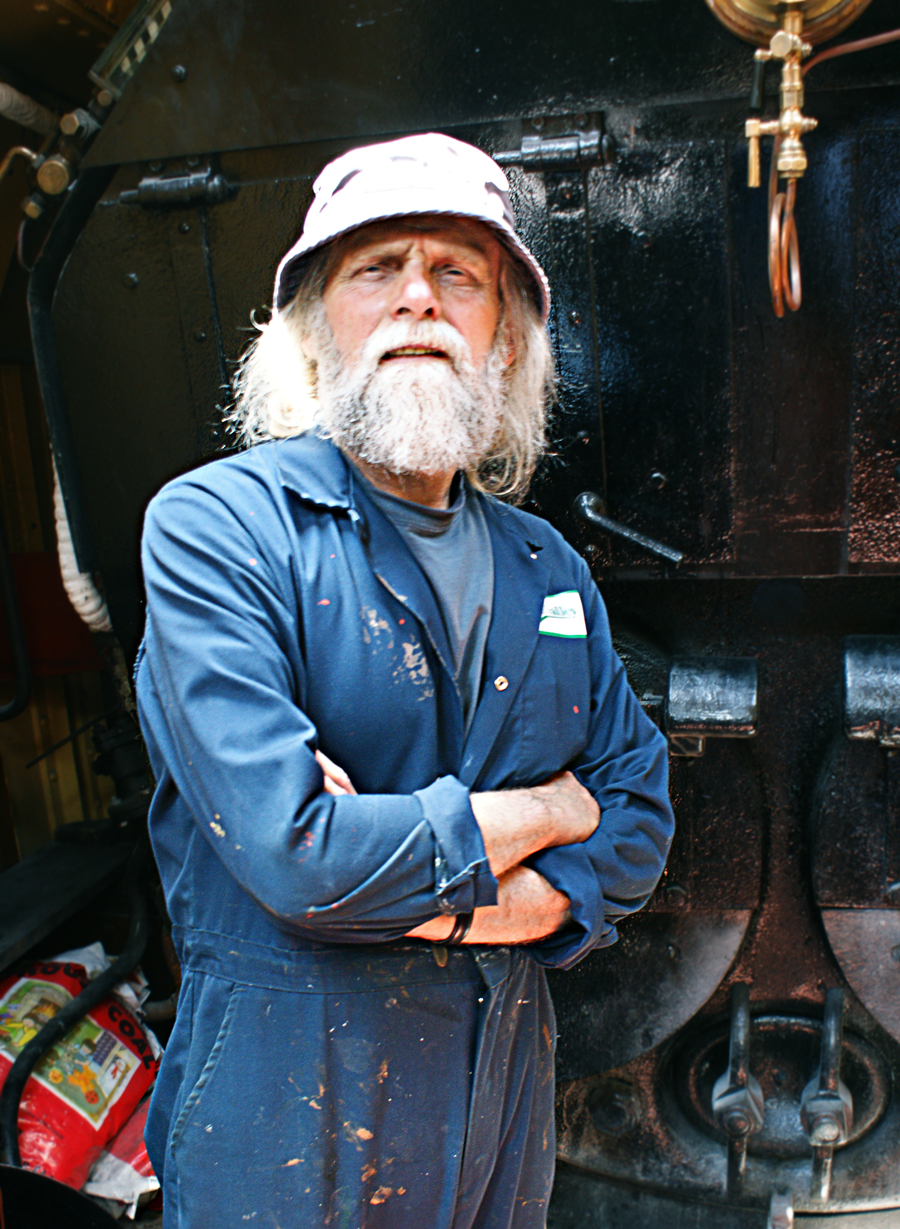
The trip was also significant as it was my first go with a borrowed SLR. Some of the photos didn’t turn out that well due to my unfamiliarity with the camera, but Mayflower seemed a fitting subject for my next photographic step. My favourite photo of the day is below..  My first attempt at real portrait photography. More photos can be found here

All in all a great trip – try it out next summer if you get the chance. Thanks M Shed!

Adventures in film – Untitled 1.2

Photography is one of my favourite pursuits, and recently I have been thinking about beginning to shoot film. Also being a fan of collage, the idea to put together some kind of filmic collage is something that has been whispering to me for a few months. I recently discovered that doing this is actually an art form otherwise known as visual poetry .

Anyhow I was walking in Victoria Park recently when a strange bunch of balloons appeared from nowhere. Having established it was not a some kind of UFO or seemingly attached to any event or child I watched them for a few moments blowing in the wind. Probably influenced by the film American Beauty I was compelled to film them. The raw footage I uploaded to my you tube account but a very talented film maker  Adam York Gregory  kindly edited the footage for me. The results of my first efforts below. I’ve got lots of things to learn,  and I’m really excited about the new possibilities that come with this medium. I hope you get something out of my/our first brief venture   – Enjoy 😉

Flying awkwardly: a year in the life of a first year PhD student.

‘Successful post graduates emerge with a new identity as competent professionals, able to argue their viewpoint with anyone regardless of status, confident in their own knowledge but also aware of its boundaries…to arrive at this point, is what being a postgraduate research student is really all about…’ Phillips & Pugh, 2005

I’ve started, so I’ll finish….  Magnus Magnusson

‘Academia: It’s like negotiating the land of OZ ……minus the good shoes’ Webber, 2011.

One year on…

I’ve had some time off from my blog due to work commitments recently and writing this next entry has proved to be a bit of a challenge to produce. Coming to the end of the academic year, and having recently passed my first year progression exam the time is right to reflect on my experiences and attempt to evaluate as reflexively as I can, what’s worked well and also not so well in order to improve and or maintain my performance and experience for the coming year. One thing I am often told is that a PhD is a journey, so as such, this account resembles a snapshot of that journey, taken at a particular point in time. Perhaps my perspectives and opinions will change as I progress. Perhaps they will become more engrained. Who can tell? Overall, I have mixed feelings at the end of year one, and if this was an ofsted report, I would probably grade this year as ‘satisfactory’. Here’s why:

Great expectations..

So, over 365 days have passed since my application for voluntary redundancy was accepted and I left my consultancy job for a life in academia.  After two refused funding applications and many years of wanting to undertake a PhD I arrived at my desk in the Autumn of 2010, full of enthusiasm and high expectations for what was to come and a clear idea of what life as a PhD student would be like. I had envisioned something which was not in retrospect, exactly that realistic.

I had imagined academia as a world of dynamic modern creatives, striving together to battle the ills of society by attempting to solve or draw attention to its shortcomings. Motivated by a passionate and relentless shared altruistic desire for the pursuit of knowledge and together working in a close team in an environment of trust, my supervisory team (perhaps in the manner of the A-team, or the outlaws of Sherwood forest or similar) together with my supervisor (who could impart a wealth of knowledge about my study and was perhaps a combination of Mr/s Majeika and say, Yoda) would form a band of scholarly rebels an together we would embark on investigation of my research topic, in the manner of an apprenticeship perhaps not dissimilar to those taken by Jedi Knights or Starfleet cadets, which eventually after three joyful years, enabled academic enlightenment which would then be passed to me. Of course all this would be supported by numerous mindbending, stimulating philosophical and theoretical conversations with my peers around life, death, love and the universe carried out in the bar until the early hours of the morning. I might even be able to impart my existing knowledge and experience on a group of bright eyed and bushy tailed students.

Okay so I’m exaggerating slightly in the account above but it’s true to say the reality of academia has not stood up to my initial ideals, which has led me to a lack of motivation  in terms of my research, however it’s also fair to say the year has not been without its notable achievements.

The good

So what positive things can I take from this year? Just being here I guess is one. The landscape of higher education is undergoing radical change and having a scholarship to undertake PhD training is likely to become even rarer in the times to come. Like most people I certainly would never have been able to afford it otherwise. Undertaking a PhD will enable me to benefit society, develop new skills, gain a qualification and change my career direction.

On a practical level having the flexibility to manage your own time is a major perk, as is the chance to be completely selfish in terms of your own training. The opportunities for real development at my previous organisations were reasonably limited. This year I have undergone a great deal of training which I just wouldn’t have been exposed to otherwise. I’ve completed 90 credits (three) masters level research modules and undergone valuable additional skills training via seven short courses or workshops which support my development as a social researcher. I’ve attended nine professional/academic conferences and presented my previous MSc research at three of these, which are all at an international level.

I’ve made some amazing friends, been a representative on the postgraduate research (PGR)  students committee and volunteered to represent the PGR students at faculty research degree board committee meetings. I assisted in organising the annual PGR student conference and was awarded a first prize for my presentation. Having had a ten year break from any kind of performing, I joined the UWE Centre for Performing Arts (CPA) and auditioned (successfully) for a UWE music scholarship. I then undertook formal singing lessons and I am preparing for my grade 8 musical theatre exam in November. I was genuinely surprised to be cast as a principle role in the university musical (also a journey in itself) which enjoyed a sell-out run at the Redgrave Theatre, Bristol and over the year, in my role as a CPA scholar, I have supported the CPA by singing or giving readings at (approximately) ten public concerts.

I’ve learnt a lot about myself. That sounds dramatic but it’s true, in ways that I couldn’t have anticipated. My skills are improving, although this has been a slow process. Whilst it is a continuing source of worry and bone of contention surviving on a budget has made me richer in other ways. It’s surprising how your identity can develop through creating, observing and appreciating things when you get off of the conveyer belt of consumption that blinds you to them so easily. It’s easy to think when you have been used to earning a certain income that when your circumstances change and you stop work that the world may end. It doesn’t. You have to find a way to adapt, reassess, negotiate but somehow life has gone on. I’m still here. Slightly shabbier looking, a bit fatter but mostly smiling and often covered in paint or glue rather than the trendy (ish) labels.

The bad

So. Where did the struggles occur? For me, concerns began to arise from the outset, as I had not been consulted regarding the appointment of my supervisory team, all of whom seemed excellent academics but I had not been assigned anyone that had in-depth knowledge of the theory I wished to draw upon, or any experience or knowledge in the methodology I wished to use. This has been an ongoing concern and I am told will not be resolved due to resourcing issues.

As I mentioned before expectations were pretty high when I arrived and certain things disappointed me, aspects of the process sometimes seemed ridiculously old fashioned and not the best way to get the best out of students. Some senior academics seemed incredibly blinkered, demonstrating clear bias toward method, philosophy or approach and disparaged the work of their well respected colleagues. All of which is apparently common in academia but not something I had expected or respected. I sort of found it unprofessional and again, old fashioned. Interdisciplinary postgraduate training had previously taught me to have an open mind to various approaches and it came as a complete shock to find that generally this didn’t seem the case in reality. Don’t get me wrong, academics are incredibly exceptional people but I was wondering that if arguing a particular thesis so repeatedly throughout your career actually makes you more blinkered? I lost motivation and the academic pedestal begun to waver as I questioned ‘was I ready to become that narrow minded? The only thing my years of education had taught me was that none of us really ‘know’ anything at all, but it was like nobody actually wanted to admit that. Instead, flags waved from methodological and philosophical islands, and the reality was far different from that I had hoped for. Beneath that I felt was fear and insecurity of difference and the unknown.

Suddenly, the emperor was before me, and I could see his dangly bits.

My poor supervisor didn’t live up to my expectations either. I am his first PhD student and it often felt like a case of the blind leading the blind particularly in the early months. He is just a few years older than me, and is very nice and kind and we drank a lot of coffee, tweeted and text and ate cake and everything was fine. Fine for months. He was very reassuring, there was no nagging and he often wrote/re-wrote chunks of my text for me. As every PhD student-supervisory relationship is different I didn’t question it, until eventually I began to wonder if that’s how everybody else’s meetings went. Turns out they didn’t, and I don’t think things are ever supposed to be ‘fine’ until that last draft has finally been submitted.  So we have to renegotiate the way things are done. No doubt I’ve done nothing but complain and kick and harass various members of staff this year over various things and they are probably all enjoying the break from the crazy Webber girl.

I found the monthly meeting process in general difficult – (this I have been told is in part due to my lack/volume of written output which is a fair criticism). The initial meetings seemed rather odd almost like a kind of role play at times.. (cue schizophrenic breakdown as I began to question the reality of the situation – am I in a play within a play?) I was told I was not playing the ‘game’ several times. Which was somewhat confusing for me as I felt I was there for a meeting about my project, and it’s a bit rubbish if I don’t know what the rules are and no one tells me. As Phillips & Pugh (2005) state above, a large part of the PhD process is learning how to negotiate and present your argument with those of high status. So, part of this meeting process involves the big-wigs belittling you as best they can so you can get used to responding in a professional way. I think I’m okay with criticism if the point made can be fully justified, but I have struggled with the way it has been delivered. Currently the sneeryness  has me yo-yo-ing between wanting to give two types of responses a) melting into a tearful heap on the floor screaming ‘high status suity man, your words, how they burn’ or b) jumping around throwing tables out of windows shouting ‘come and ‘ave a go if you think you’re ‘ard enough’. Again this type of questioning encouraged a lack of motivation not just because it wasn’t particularly pleasant but also it seemed poorly justified and old fashioned. What exactly is so special about academics/academia which qualifies them to behave in a way which would ultimately be seen as unprofessional in commercial or other types of public practice?

The epiphany…

Oddly enough one of the most difficult things I have struggled with is almost an existential one. Often people say that a PhD starts with research questions, but I say it starts with a person. The researcher. Whilst I’ve managed to pass my first year, my research outputs or study focus is not where it should be due to time lost. Whilst some commentators say this is due to too many other things going on, I attribute it to a basic loss of engagement and motivation due to a) strange relations with my supervisors and my own pre-occupation with my unhappiness about the process and b) having to negotiate this pending ‘new identity’  that Phillips & Pugh (2005) speak of.

I sat in front of a computer, staring at a blank screen unable to write for months before finally being signed off work with depression. It was through therapy (together with a two week arts intervention experience ‘The Fortnight Project’ which ran in Bristol as part of the ‘Mayfest’ theatre festival in May) that I began to explore my real motivations for doing a PhD – beyond that which was written on the application form or CV. Having got to know more and more students I discovered that behind each of them was a story. All of us were genuinely interested in our subjects and believed in what we were doing, but there was always something else. The expectations of a parent, or the rivalry of a sibling, the chance to escape domestic drudgery in a different country, avoidance of the ‘real’ world, the passions of a working class girl who saw the lawns of Cambridge one day and wanted a different life.  There were many stories amongst the research proposals that were not always openly acknowledged. So what was mine?

I realised that education had mostly, done a lot for me on behalf of my parents, and I realise now that it’s how I learnt to grow up. So perhaps this is my final push to do that. I never really totally learnt how to negotiate problems, differences or defend myself well or speak my mind in all circumstances, or believe in myself enough to go for what I want. Perhaps I’m here doing this so I can finally learn.  I’m also acutely aware of how, leaving school with just my few GCSES, that for seven years I was often treated as I were stupid, less of a person or (literally at times!) patted on the head and told a ‘girl like me’  wouldn’t need to go to university as I could just find a rich man.

The situation is also a bit of a double edged sword. The new PhD identity will obviously eclipse the old one.. but what will that mean in terms or how I relate to my family? With every course I take I am increasingly viewed as a strange and foreign entity and the title ‘doctor’ will be the final allienatory straw breaking the donkeys back. Whilst my family (complicated) are happy for me, they just don’t get it, or really believe in or value it. So which identify do I use when I’m a Doctoral graduate? The old one so I can relate to them, or the new one, when I can sneer alongside the best of high status professors?  Fundamentally, I believe that people should be recognised for their achievements but I don’t really recognise the social hierarchy. Who am I to say that I am higher status due to those words ‘Dr’ before my name? In some way I almost felt guilty. If I go back to the Wimpy now, after however many years it is – am I really so different? and psssst….   most importantly – Am I going to end up being completely boring, wearing elbow patches with no idea how to be silly or fun or believe in anything without reams of ‘evidence’ to substantiate it? (oh okay that’s an exaggeration, no one really wears elbow patches anymore, and okay some academics are fun (my supervisor is that’s half our problem)

The future

So. It seems I have passed my first year, although it’s not been without incident or a few pilot weeks on prescription drugs (I had a bad reaction to them and gave them up for art and theatre instead) I guess there is nothing else I can do but re-address my expectations of the PhD process, plan my next six months thoroughly, catch up to where I feel I should rightly be and try and hope things with my team improve (Although anecdotally it’s supposed to get really hard at this point). Having spoken to numerous PhD students and graduates it is fair to say none of them have really raved about the process and most seem, by the end of their projects to be bloody glad to be rid of their thesis. Academia is indeed a strange creature, and this odd, Oz like journey appears to be just as concerned with endurance and determination and negotiating relationships as it is with actual research. I decided that what I need to survive, (along with a sense of play and embracing creativity and art outside of work) is a mantra, thus quoted by Magnus above:

I’ve started… so I’ll finish.

(repeat twice a day, every day, until thesis completion)

However I feel, (good or bad) today, next week or this time next year, it won’t last forever – the time has flown and I received my bursary payment schedule recently and looking at those 24 payment dates …. well two years does not seem that long at all.

I’d better get on with it then.

(‘Flying awkwardly’ was also posted at  SociologicalImagination.Org )

R’s story…..

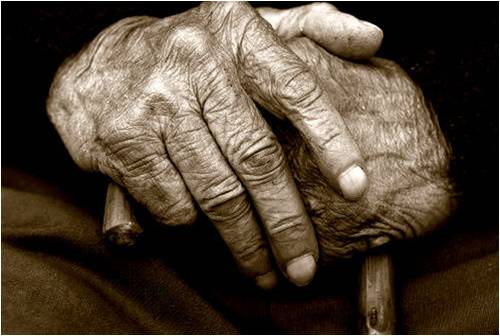
‘R was 92 and had previously held a driving licence. He walked slowly with the aid of a stick. He refused to use the ramp that was available and utilised by the other passengers when boarding and alighting the bus and he would not take the arm of Martyn (the driver) or others if it were offered. Despite having mobility problems he preferred the back seat of the bus and both drivers and passengers would wait until he had made his way up the steps to the back and was seated in his favourite spot. He was dressed smartly in a tweed jacket and flat cap. He rarely acknowledged other passengers although they sometimes made reference to him in their conversations so it was clear he was still a part of ‘the group’. Aside from when he spoke to me he did not interact with other passengers nor seemed to be engaged with the world outside the window. Instead he was continually lost in his own thoughts. One of the first things R explained to me was how his wife had died (it was not clear if this had occurred recently or not) his eyes filled with tears as he told me that he was alone and that she was no longer with him. He went on to say that the bus service and the lunch club he attended was his only contact with the outside world and that he would be lost without it. In the absence of the bus service he told me he would have ‘nothing’.

Webber, 2010.

Investigating social enterprise..

This idea has not gone away. Some great resources developed by UWE for vitea (be inspired):

A Corner of the Ocean @ the tobacco factory theatre

A corner of the ocean.

As a diver – and having been in a few situations when perhaps I could have been left at the bottom of the ocean (literal or metaphorical) I was attracted to the themes within this production immediately. Presented by Jammy Voo and performed at The Tobacco Factory Theatre in June, this was to be my first taste of seeing contemporary physical theatre in a while. But it was a lot more than that. Combining music, physical theatre, puppetry, comedy and visual imagery, it was a brilliant demonstration of the opportunities theatre can bring when you start to think outside of the box. Suddenly, I realised, the performance possibilities are endless. Things I learnt from this production:

Puppet power. My most recent experience of puppetry was er.. a performance of Avenue Q. This was in a different league. Using four different varieties of puppet it was first time I had seen this kind of storytelling in a way which was interweaved with other types of contemporary theatre.  Outside of comedy, I don’t remember ever having had an emotional response to puppetry before this performance. The bed scene was touching, the closing scene was extremely powerful, if a little scary and I’ve gone off minks in a big way.

I enjoyed the use of space, the staging was quite intricate but didn’t seem overwhelming and the characters moved within their own complex corners and sometimes within each others. It seemed evident the company had a close rapport which s added to the slickness of the performance. The incorporation of live music and singing served to intensify the experience as emotion and mood changed from scene to scene as we got to know the different characters and experience the highs and lows of dealing with loss.  Things I particularly remember: the story of a girl crying on a bus, a Christmas spent alone, how it’s inevitable your head will explode if you always do and say the right thing, dancing to (born slippy?) the application of make-up (perhaps also a reference to Jimmy Voo’s clowning origins?) and how in the culmination of the work, the characters discovery that even in the darkest times of love and loss, there may be a positive moment, in the realisation that perhaps much of your identity and your life can easily be eclipsed by your relationship and the man you love.

I stayed for the question session at the end which was really informative and a great way to understand how the piece was together (thank you). I’d been thinking about clowning a bit (as you do) and whilst this was not a clowning piece the voo’s have inspired me to give it a go.

This was a highly creative, invigorating and original piece of work which demonstrated the multi-skilled and accomplished talents of the company whilst revealing exactly what it is to be a woman experiencing love, grief and loss.

Oh crap. Realise the last sentence made it sound a bit like a school report.

The performance was empowering and brilliant.

‘nuff said.